Wednesday, March 14, 2012

Multiple Worlds: Physics Vs. Metaphysics


Quantum Theory: This theory states that every particle is everywhere unless the particle is being observed.

Wave Particle Duality: Particle and waves are neither one nor the other, but had certain properties of both.

Einstein's Observation: Physical objects are not in space, but these objects are spatially extended. In this way the empty space loses it's meaning.

Hugh Everett: He invented a quantum theory of Multiple Universes. His theory of independent parallel universes states clearly that:
# The reality of Multiple World is so as they are present in the same Time & Space coordinate, in which we are.
# Big Bangs are always happening in the Multiple Universes and Universes are being formed continuously.
# Parallel Universes may be bring horrible catastrophe too.
# Everett envisaged the concept of Quantum Immortality, as every second an individual is multi-furcating into so many.

Quantum Discoherence: However according to the theory of quantum discoherence, the Parallel Universes will never be accessible to us in our own Time & Space. We shall be able to observe one world only at a given Time & Space.

The Question Is: Why can some scientists believe in physical parallel universes, but find it hard to accept a non physical one ?

A Turning Point: ..comes when we see how subtly Science (Physics) corroborates with the other world idea of Religion (Metaphysics).

Emily Dickinson's one short poem just defines the spirit behind this thought and possible alternative theory, is:
"Faith a fine invention, for gentlemen who see;
But microscopes are prudent, in an emergency."

Some Quotes From Scriptures Spiritual:
# O My Friends !
Have ye forgotten that true and radiant morn, when in those hallowed and blessed surroundings ye were all gathered in My presence beneath the shade of the tree of life, which is planted in the all glorious paradise? Awe-struck ye listened as I gave utterance to....
(from the writings of Baha'i Faith)
# Almost all religious prayers talk about this world and the world to come..
# Metaphorically this is a sort of clear indication of the existence of many worlds spiritually and the journey of life continues hence after this life, which is referred as the Quantum Immortality by the Physicist Hugh Everett.

Pictures:
from top to down: Albert Einstein, Hugh Everett, Lotus Temple-a Baha'i House of worship in India.

Wednesday, February 29, 2012

Hugh Everett: A Man Much Before Of His Time


Duality Of Light: We discovered that all the small particles that collectively construct our world travel through space as probability waves. Instead of traveling from point A to point B like a thrown baseball, today we understand that light behaves in some ways like a solid particle when it interacts with other particles, however, when light travels from place to place, like a wave in an ocean it has no definite position. In fact, even matter particles, such as the particles that make up our bodies, regularly disappear between one position and the next.

Uncertainty Principle: One of the founders of quantum theory, Werner Heisenberg discovered what is now a key principle concerning all quantum behavior. As a particle gives up information about its location, information about its momentum is lost in equal measure. This is called the Heisenberg uncertainty principle, which states that both the position and momentum of a particle cannot be known. The more we know about one, the less we know about the other. So as a rule, whenever a particle assumes a precise position in reality, in that instant it has no momentum. And whenever a particle is moving from one place to another, it has no specific location. Only when the particle interacts with something else does it then establish which physical reality we will experience, but in between interactions the particle exists in another type of reality, a sort of multiplicity where all possibilities are combined together.

Quantum Theory Of Mechanics: Quantum theory was developed near the turn of the century and it wasn’t until 1957 that all the possibilities within each quantum wave led a young graduate student of physics named Hugh Everett III to produce the now famous Many-Worlds Theory as his doctorate thesis. Everett was a student of John Archibald Wheeler, the renowned American physicist and longtime Professor at Princeton. The Many-Worlds Theory makes the simple conclusion that one probabilistic outcome is as real as any other, predicting an immense surplus of many-worlds branch away from each moment of now.

Many Worlds: We can imagine an infinite number of copies identical to our present, but then in the next moment, in each copy there is one single particle that is in a slightly different position than all the others. The denser areas of probability in the interference pattern represent the more probable worlds, while the thin areas represent the least probable worlds. The areas outside the wave pattern that are completely dark can be thought of as worlds outside the realm of quantum possibility.

Reasonable Criticism:
Some scientists shrug at the Many-Worlds Theory and continue to believe there is something that makes quantum reality operate only at the subatomic level, and not at a macrocosmic level where we live. But the technological applications of quantum mechanics to chemistry and electronics have already had a tremendous impact upon society. In addition to television shows and movies where characters cross over into parallel universes, physicists are working toward a complete quantum description of reality. If a complete theory is ever accomplished, it will explain why certain things are possible while others are less so, and it will tell us what is impossible. Presently, the Many-Worlds Theory does not claim that other worlds with different laws and forces of nature cannot exist, but if the probabilities of quantum mechanics were found to be basic to nature then we would reasonably conclude the same laws govern all of existence.

Troubled Private And Professional Life: Hugh Everett was a brilliant mathematician, an iconoclastic quantum theorist and later a successful defense contracter.
He introduced a new conception of reality to physics and influenced the course of world history: the man who invented a quantum theory of multiple universes.

After his new theory of multiple universes met scorn, Hugh Everett abandoned the world of academic physics. He turned to top secret military research and led a tragic private life.
To his children he was someone else again: an emotionally unavailable father; "a lump of furniture sitting at the dining room table", cigarette in hand. He was also a chain-smoking alcoholic who died prematurely in 1982 at the age of 51.

Monday, February 20, 2012

Einstein's Quantum Mechanics: Everett's Parallel Universes


Quantum Mechanics: Broadly speaking, quantum mechanics incorporates four classes of phenomena for which classical physics can not account:
# The quantization of certain physical properties,
# Wave-particle duality,
# The uncertainty principle,
# Quantum entanglement.

The Wave-Particle Duality: It provides a mathematical description of much of the dual particle-like and wave-like behavior and interactions of energy and matter.
The wave-particle duality of energy & matter and the uncertainty principle provides a unified view of the behavior of photons, electrons and other atomic scale objects. Quantum theory states that every particle is everywhere unless the particle is being observed.
An electromagnetic wave such as light could be described as particle-later called the photon-with a discrete quanta of energy that was dependent on it's frequency. This led to a theory of unity between subatomic particles and electromagnetic waves called wave-particle duality in which particle and waves were neither one nor the other, but had certain properties of both.

Albert Einstein's Observation: Physical objects are not in space, but these objects are spatially extended. In this way the concept of empty space loses it's meaning.

Philosophical Interpretations: The Everett many-worlds interpretation, formulated in 1956 holds that all the possibilities described by quantum theory simultaneously occur in a multiverse composed of mostly independent parallel universes. While the multiverse is deterministic, we perceive non-deterministic behavior governed by probabilities, because we can observe only the universe, i.e. the consistent state contribution to the mentioned super position, we inhabit. Everett's interpretation is perfectly consistent with John Bell's experiment and makes them intutively understandable. However, according to the theory of quantum discoherence, the parallel universes will never be accessible to us.

Note:
# Pic 2 from top; Probability densities corresponding to the wavefunctions of an electron in a hydrogen atom possessing definite energy levels and angular momentum.
# Bottom picture; Some trajectories of a harmonic oscillator in a classical mechanics and quantum mechanics.

Saturday, February 4, 2012

Cell: Multicellularity In A New Perspective


Cell: The cell is the basic structural and functional unit of all known living organisms. It is the smallest unit of life that is classified as a living thing, and is often called the building block of life. can be classified as unicellular (consisting of a single cell; including most bacteria) or multicellular (including plants and animals). Humans contain about 10 trillion cells. Most plant and animal cells are between 1 and 100 µm and therefore are visible only under the microscope.
The cell was discovered by Robert Hooke in 1665. In 1835, before the final cell theory was developed, Jan Evangelista Purkyně observed small "granules" while looking at the plant tissue through a microscope. The cell theory, first developed in 1839 by Matthias Jakob Schleiden and Theodor Schwann, states that all organisms are composed of one or more cells, that all cells come from preexisting cells, that vital functions of an organism occur within cells, and that all cells contain the hereditary information necessary for regulating cell functions and for transmitting information to the next generation of cells.
The word cell comes from the Latin cellula, meaning "a small room". The descriptive term for the smallest living biological structure was coined by Robert Hooke in a book he published in 1665 when he compared the cork cells he saw through his microscope to the small rooms monks lived in.

Multicellularity in Animals: There are more than 100 visibly distinguishable kinds of differentiated cells in the vertebrate animals. These are organized into issues; the tissues into organs. Groups of organs make up the various systems - digestive, excretory, etc. of the body.

Multicellularity in Plants: Like other organisms, plant cells are grouped together into various tissues. These tissues can be simple, consisting of single cell type, or complex, consisting of more than one cell type. Above and beyond tissues, plants also have a higher level of structure called plant tissue systems. There are three types of tissue systems: dermal tissue system, vascular tissue system and ground tissue system.

An Unique Experiment: An evolutionary transition that took several billion years to occur in nature has happened in a laboratory, and it needed just 60 days.
Under artificial pressure to become larger, single-celled yeast became multicellular creatures. That crucial step is responsible for life’s progression beyond algae and bacteria, and while the latest work doesn’t duplicate prehistoric transitions, it could help reveal the principles guiding them.
“This is actually simple. It doesn’t need mystical complexity or a lot of the things that people have hypothesized — special genes, a huge genome, very unnatural conditions,” said evolutionary biologist Michael Travisano of the University of Minnesota, co-author of a study Jan. 17 in the Proceedings of the National Academy of Sciences.

One Cell in Multicellular Organization: “Multicellularity is the ultimate in cooperation,” said Travisano, who wants to understand how cooperation emerges in selfishly competing organisms. “Multiple cells make up an individual that cooperates for the benefit of the whole. Sometimes cells give up their ability to reproduce for the benefit of close kin.”
The Paramount Factor The new study suggests that environmental conditions are paramount: Give single-celled organisms reason to go multicellular, and they will.

The Future Implications: Targeted breeding of single-celled organisms into complex, multicellular forms could also become a biotechnological production technique.
“If you want to have some organism that makes ethanol or a novel compound, then — apart from using genetic engineering — you could do selection experiments” to shape their evolution, Travisano said. “What we’re doing right here, engineering via artificial selection, is something we’ve done for centuries with animals and agriculture.”

Link for the recent research report in above reference:
http://www.wired.com/wiredscience/2012/01/evolution-of-multicellularity/

Wednesday, January 18, 2012

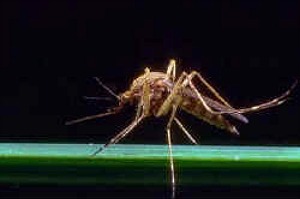
Insect: A Sex On Six Legs


Greatest number: The animal kingdom's working class they are, constituting 90 percent of all the species found on our planet, while including invertebrates they form 99 percent of life forms on earth. Insects are the life-forms most adapted, socially most advance, even their sexes are determined based on their working nature in their society.

Ecological importance: The sheer magnitude of insect numbers mean that they could not be eliminated without leaving a hole so large ... that the rest of the world's organisms would be unable to continue their lives.

The caste system
:
The caste system of insects enables eusociality the division of labor between non-breeding and breeding individuals. A series of polyphenisms determines whether larva develop into queen, workers and in some cases soldiers. In some ants, an embryo must develop under certain temperature & photoperiod conditions in order to become a reproductively-active queen. In bees, royal jelly provided by worker bee causes a developing larva to become a queen. Royal jelly is only produced when the queen is aging or has died.

Polyphenism: A polyphenic trait is a trait for which multiple, discrete phenotypes can arise from a single genotype as a result of differing environmental conditions.

Key of the caste
:
When a queen lays eggs, each egg can develop into a different caste depending on the environment it is in -- the temperature it develops at and the nutrition it receives. But the key to "switching" into a specific caste is controlled to a large extent by one chemical inside the eggs, which is called juvenile hormones.

Scientist believes this as unleashing of some kind of ancestral potential. That reveals the hidden evolutionary potential.


Giant super soldiers in lab
:
(ref: BBC, Nature News, 5 Jan 2012) Dr. Ehab Abouheif from McGill University in Montreal led the team which found that treating ant larvae with a hormone at a very specific time during their development turned those ants into the giant super soldiers.

More possible implication of this finding
:
Dr. Abouheif says that the unlocking desirable ancestral features could be key to breeding crop plants with higher nutritional value or even tracking the mechanism that causes cancer. "Who's to say that all of that crazy growth that occurs in cancer isn't the unleashing of some kind of ancestral potential," he said. "If we could find what that was, may be we could reverse it", reveals that hidden trait could be unlocked in many species.

Sunday, January 15, 2012

Survivors Of The Future

The largest animal group: Arthropods are animals with segmented bodies and six or more jointed legs. They are the largest animal group on Earth. In fact, more than three out of four of all animals are arthropods. They are found everywhere - on land, in trees, in freshwater and saltwater, and even underground. Arthropods are generally small. Most are less than 1 cm long. Some arthropods, however, are quite large. The giant king crab, for example, measures over 3.2 m from the tip of one outstretched leg to another. Some of the most familiar arthropods are butterflies, beetles, flies, ants, bees, spiders, scorpions, shrimp, and crabs.

The arthropods constitute over 90 percent of the animal kingdom.


The earliest guest of our planet:
Arthropods provide the earliest identifiable fossils of land animals, from about 419 million years ago in the Late Silurian, and terrestrial tracks from about 450 million years ago appear to have been made by arthropods.[49] Arthropods were well pre-adapted to colonize land, because their existing jointed exoskeletons provided protection against desiccation, support against gravity and a means of locomotion that was not dependent on water.[50] Around the same time the aquatic, scorpion-like eurypterids became the largest ever arthropods, some as long as 2.5 metres (8.2 ft).

Future belongs to them: Their track record strongly recommends that in future they certainly will evolve with more adaptations to the changing scenario on our planet, while humans and other animal species have a weak chance to survive. May be they rule the world with greater sizes and with adaptations unknown and unimaginable so far.

Insects and grasses: It's hard to imagine that if we humans misuse our nuclear war potential, who will survive on this blue planet except Insects and Grasses (as grasses too have special tissue structures which makes them a better contender for survival than the Dicot plants) !!


Saturday, January 14, 2012

Biological Classification: Kingdom Animalia


Origin of life
: Even the oldest human observation (like the Rig Vedic period of India) recorded in history, supports the thought that most primordial life forms might have began in water only.
(reference: pictures 1, 2 & 3 of a hymn from Rig Veda shown are in old Sanskrit language text translated in Hindi & English).


Later Miller-Urey experiment (1952-53) and Oparin proved it so in laboratory conditions for the modern mind.
Primordial Soup: This first life form, sort of naked protoplasm kind of thing took the shape, which was named Cell by Robert Hooke (1665) and life began to grow and took a route of simple to complex forms, towards two major branches, as animal and plant cell.
(reference: picture 4, 5 & 6).

Need of Classification: As number of life forms were in millions with much variety, a need arose to name and classify them. As we all know the credit goes to Carolus Linnæus a Swedish botanist, physician, and zoologist, father of modern taxonomy. Credit for Binomial nomenclature also goes to
Linnæus. The application of binomial nomenclature is now governed by various internationally agreed codes of rules, of which the two most important are the International Code of Zoological Nomenclature (ICZN) for animals and the International Code of Botanical Nomenclature (ICBN) for plants.
(reference picture: 7, 8 & 9)

System of Classification and their Units: All the types of classifications proposed & followed from Linnaeus (1735) to Cavalier-Smith (2004) follow almost the same domain name of units as: Kingdom-Phylum-Class-Order-Family-Genus-Species.
(reference picture: 11, 12 & 13)

Interesting Evolutionary Trend: The classification patterns followed is so interesting that this itself is an Evidence in the support of Darwin's theory of Organic Evolution.
As we move from base of the classification, we find the life forms they them self are arranged in simpler to complex forms like:
Unicellular Prokaryote-Unicellular Eukaryote- Multicellular Tissue level- Multicellular organ level- Multicellular Organ System level.
(reference picture: 14)


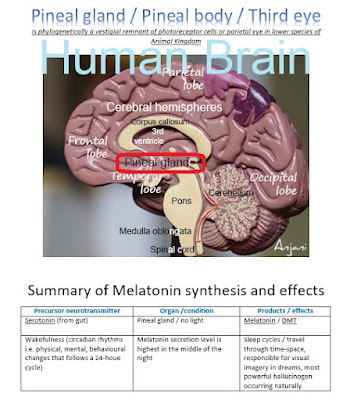
Pineal gland, the mystical third eye

Pineal gland   It is a very small unpaired midline brain structure of endocrine gland, tiny as a rice grain size, situated laterally (anatom...