Saturday, November 29, 2014

Old fold mountains of India

Young growing Sivalik hills 
(of the outer Himalayas)
&
 worn down old fold mountains 
(of Indian peninsular plateau)

1. Sivalik range are the hills, where one can see the geologically young tectonic activity
rise of the fragile hills of the outer Himalayan range year by year

2. And to it's south are the 'northern fertile plains of Ganges

3. At the southern end of these plains are the region where Indian peninsular plateau starts with 
a. it's 5 old fold mountains mostly Archian in age, 
b. worn down due to weathering with no tectonic plate activity underneath.
The Sivalik hills are the southernmost and geologically youngest mountain range of the outer Himalayas
The tectonically active zone of the Himalaya, are considered as the most dynamic formation where they annually rise up by 3 to 4mm. As being very young in geological formation and tectonically active, the hills exhibit a very conspicuous fragile terrain, they are bounded on the south by a fault system called the Main Frontal Thrust.


Old fold mountains
(5 hill ranges of Indian peninsular plateau)
1. Old fold mountains are characterized by having stopped growing higher 
due to the cessation of upward thrust caused by the stopping of movement of the tectonic plates 
in the Earth's crust below them

2. In ancient times they were extremely high 
but since have worn down almost completely by millions of years of weathering.

3. The cratons are mostly Archaean in age and are generally composed of 
low-grade greenstones. (Dharwar, Eastern Ghat, Aravalli and Satpura)


1. Aravalli range Literally meaning 'line of peaks', a range of mountains in western India running approximately 800 km in a northeastern direction, are the oldest fold mountains in India. The northern end of the range continues as isolated hills and rocky ridges into Haryana state, ending in Delhi. The famous Delhi Ridge is the last leg of the Aravalli Range, which traverses through South Delhi and terminates into Central Delhi where Raisina hill is its last extension. It is one of the world's oldest mountain ranges. It dates back to a pre-Indian subcontinental collision with the mainland Eurasian Plate. The southern end is at Palanpur near Ahmedabad, Gujarat.(text credit:http://en.wikipedia.org/wiki/Aravalli_Range)
The system is divided into two sections: the Sambhar-Sirohi ranges, taller and including Guru Peak on Mount Abu, the highest peak in the Aravalli Range (5,650 feet [1,722 metres])(text credit:http://www.britannica.com/EBchecked/topic/32222/Aravalli-Range)

2. Satpura Range The name of which means 'Seven Folds', range of hills, part of the Deccan plateau, western India. The hills stretch for some 560 miles (900 km) across the widest part of peninsular India, through Maharashtra and Madhya Pradesh states. The Satpura Range includes the Mahadeo Hills to the north, the Maikala Range to the east, and the Rajpipla Hills to the west. Highest point of satpura range Dhupgarh is located in Pachmarhi.(text credit:http://www.britannica.com/EBchecked/topic/525030/Satpura-Range)

The range rises in eastern Gujarat state near the Arabian Sea coast, running east through the border of Maharashtra and Madhya Pradesh to the east till Chhattisgarh. The range parallels the Vindhya Range to the north, and these two east-west ranges divide Indian Subcontinent into the Indo-Gangetic plain of northern India and the Deccan Plateau of the south. The Narmada River originates from north-eastern end of Satpura & runs in the depression between the Satpura and Vindhya ranges, draining the northern slope of the Satpura range, running west towards the Arabian Sea. The Tapti River originates from eastern-central part of Satpura, crosses the range in the center & further runs at the southern slopes of Satpura towards west meeting the Arabian Sea at Surat, draining central & the southern slopes of the Satpura Range. The Godavari River and its tributaries drain the Deccan plateau, which lies south of the range, and the Mahanadi River drains the easternmost portion of the range. The Godavari and Mahanadi rivers flow into the Bay of Bengal. At its eastern end, the Satpura range meets the hills of the Chota Nagpur Plateau.(text credit:http://en.wikipedia.org/wiki/Satpura_Range)

3. Vindhya range 'Vaindh' (to obstruct) or 'Vindhya' means 'hunter' in Sanskrit, and may refer to the adivasi (tribal) hunter-gatherers inhabiting the region, refers to a complex, discontinuous chain of mountain ridges, hill ranges, highlands and plateau escarpments in west-central India, located to the north of the Narmada River.
A series of hills connects the Vindhya extension to the Aravalli Range near Champaner.
A southern chain of runs between the upper reaches of the Son and Narmada rivers to meet the Satpura Range in the Maikal Hills near Amarkantak.

4. Western Ghats( the Sahyadris) Forming the western edge of the Deccan tableland, the Western Ghats run in north-south direction, parallel and close to the Arabian Sea coast, from the Tapi valley to a little north of Kanniyakumari for a distance of 1,600 km. यह वास्तविक पर्वतश्रेणी नहीं है वरन प्रायद्वीपीय पठार का ही एक भ्रंश कगार है। यह उस भ्रंश का द्योतक है जो अफ्रीका से भारत के अलग होते समय उत्पन्न हुआ था।

5. Eastern Ghats Bordering the eastern edge of the Deccan Plateau, the Eastern Ghats run almost parallel to the east coast of India leaving broad plains between their base and the coast. In striking contrast to the continuous eminence of the Western Ghats, it is a chain of highly broken and detached hills starting from the Mahanadi in Orissa to the Vagai in Tamil Nadu.
#author wishes thanks to Ms Padmavati Pandey for her extensive support during researching this topic.  
#reference cited links are thankfully quoted at appropriate place.

Tuesday, November 11, 2014

Mahabharat period and Chhattisgarh

Mahabharat period
There are astrological, natural, geographical, physical, inscriptional and scriptural evidences that unquestionably establish the date of epic Mahabharat war as 3139 BC
“Vishva Panchangam”, established in 1925 and published by  
Kashi Hindu Vishvavidyalaya (Benares Hindu University), Varanasi. 
It gives all the three eras: Kali era, Vikram era and (Shalivahan) Shak era.
It says on page 3 that 5,100 years have already elapsed before 2056 
Vikram year which is 1999 AD. It means that the existing Kali era is 5101 
in 1999 AD, which comes to (5101 - 1999) 3102 BC.
credit: http://www.thevedicfoundation.org/bhartiya_history/mahabharat.htm

छत्तीसगढ़ की जातीय एवं सांस्कृतिक परम्पराओं में महाभारतकालीन इतिहास की एक झलक  
1.छत्तीसगढ़ में सदियों पुरानी महाभारत के पांडव नायकों की जोश और ओज़ पूर्ण साहसिक-गौरव-इतिहास के प्रस्तुति की सांस्कृतिक-परम्परा का पंडवानी गायन, 2.महानदी तट  के राजाओं का पाण्डव वंशी इतिहास, 3.सिरपुर-चित्रांगदपुर-चेदि देश और कालांतर में छत्तीसगढ़ के पाण्डव वंशी सम्बन्ध, 4.'पहाड़ी कोरवा 'और  'पंडो 'आदिम जनजातियों का महाभारत कालीन  'कौरव 'और  'पांडव' से जुड़ी उनकी मान्यताएं ....
Tribes of Bastar
यह सभी पौराणिक लिंक एवं संकेत, छत्तीसगढ़ के इतिहास को और समझने तथा लिखने के लिए दिशा-निर्देश का काम करते हैं !!  

'Panduvanshi' history of Chhattisgarh 
History of Chhattisgarh or South Kosala can be traced back only from the 4th century AD. Between the 6th and 12th centuries AD the Sarabhpurias, Panduvanshi, Somvanshi, Kalchuri, and Nagvanshi rulers dominated this region.    

More historical links of Mahabharat period
As Pandvas spent their 'hiding-period' (अज्ञातवास) in these hills of south Koshal, while staying all along the banks of Mahanadi river.
courtesy:http://www.oocities.org/siliconvalley/screen/3299/history/maps.htm
So various places of Chhattisgarh have found reference in the epic book of Mahabharat; as states won by Sahdev named Prakkosal, Aranya (अरण्य ) areas of Bastar were referred as Kantar state and places won by Karan (करण) is called Kosal janapad (कौसल जनपद).
Chitrangada's father Chitravas was the king of Chitrangadpur (Sirpur). Vabhruvahan, son of Arjun and Chitrangada was the king of Chedi.

Maikal mountain ranges of Satpura
temple at Kawardha (1349, Fadinagvanshi king Ramchandra)
Stone inscriptions (शिलालेख) found from different places on the banks of Mahanadi river as in Sirpur, Rajim, Aarang states that kings of this region called them self Pandav and regarded Vabhruvahan as their ancestor. It is believed that Chedidesh state of Vabhruvahan was later called Chedigarh and then on Chhattisgarh.
http://sciencedoing.blogspot.in/2014/11/history-of-chhattisgarh-in-nutshell.html

Mahabharat-period link of 'Pando' and 'Pahadi Korwa' tribes of Chhattisgarh
Major population in Chhattisgarh comprises tribal population. Among the primitive tribes are Pando and Korwa, who still live in forest. The Pando tribe believe themselves as the member of "Pandav" clan of epic Mahabharata. The Korwa tribe believe themselves to be the member of "Kauravs" of Mahabharata.
http://en.wikipedia.org/wiki/Surguja_district
 
The main concentration of Hill-Korwa tribe is in Jashpur, Sarguja & Raigarh. According to Anthropological description of family they belongs to Austro-Asiatic family.
http://cjtdp.cg.gov.in/tribes.htm
http://www.ethnologue.com/language/kfp 

#reference cited links are thankfully quoted at appropriate place.
#author wishes thanks to Ms Padmavati Pandey for her extensive support during researching this topic. 

Saturday, November 1, 2014

History of Chhattisgarh in a nutshell

Though a separate state of Chhattisgarh became reality

when it was declared the 26th state of India on 1st November 2000;

but the history of Chhattisgarh 
goes back to tens of thousands of years !!

Anthropological evidences
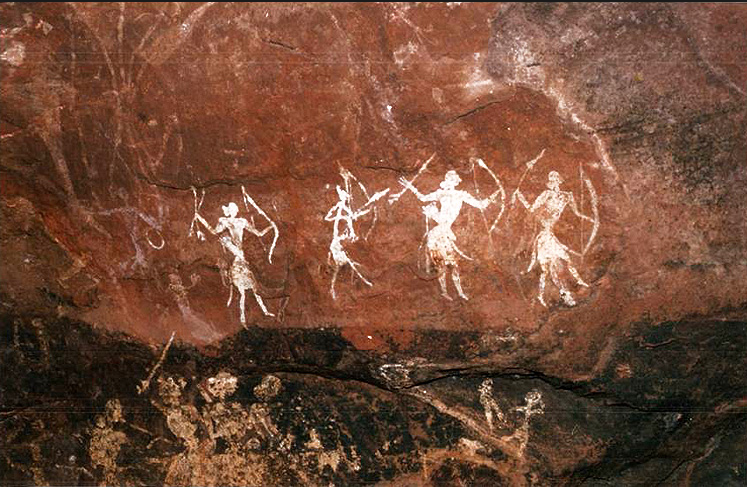
The anthropologists have found evidences of some of the earliest human habitations in the rocks and cave of this ancient land.
pic courtesy:http://www.bradshawfoundation.com/india/pachmarhi/
Hstorical evidence of rich human habitation starts from the 'Stone Age', as Singhanpur caves of Raigarh district and Kabra hill rock painting are about 30 to 50 thousands years old.
*http://www.cgculture.in/archaeology/Rock%20Art%20Site%20In%20Chhattisgarh.htm
*http://www.bradshawfoundation.com/india/pachmarhi/
*http://www.indiamike.com/india/chhattisgarh-f148/trip-report-to-singhanpur-caves-raigarh-t179119/
*http://wikimapia.org/13583821/Singhanpur-Caves 

Mythological history:
The mythological history of Chhattisgarh region stretches back to the period of Ramayana and Mahabharata. According to legends the deep Sal forest regions are Dandakaranya itself, where Lord Rama spent much of his fourteen-year exile from Ayodhya.

Ramgarh hill site where caves are caves and paintings are ound
bill board depicting possible route of Rama,s travel through these places

South Kosal or Maha Kosal was an old name of Chhattisgarh, which differentiated it from Kosal of north i.e. Ayodhya and Shrawasti. 
Bastar region of Chhattisgarh also named as Kantar or Mahakantar or Dandakaranya.

As per reference in Ramayana, Koshilya the mother of Rama was the daughter of King Bhanumant, who belonged to the family of a powerful king dynasty Kosal, south of Vindhyan mountain near Nagpattan. As Bhanumant had no sons, after marriage of his daughter to Ayodhya king Dashrath, this Kosal state was annexed to his state.

As Rama, Laxman and Sita spent much of their 14 year exile in Dandakaranya, there are many places related to their sojourn and stay. Ram devotee Bhil lady Shabri was born in Shivarinarayan.

Various places of Chhattisgarh have been referred in Mahabharat. 
States won by Sahdev named Prakkosal, Arany areas of Bastar were referredf as Kantar state. Places won by Karn is called Kosal janapad.

Chitrangada's father Chitravas was the king of Chitrangadpur (Sirpur). Vabhruvahan, son of Arjun and Chitrangada was the king of Chedi.
Temples at Rajim, called Triveni of Chhattisgarh
Ballabhachary birth place, Champaran near Rajim

Stone inscriptions (शिलालेख) from places on the banks of Mahanadi river; Sirpur, Rajim, Aarang states that Kings of this region called them self Pandav and regarded Vabhruvahan as their ancestor. It is believed that Chedidesh state of Vabhruvahan was later called Chedigarh and then on Chhattisgarh.
Ramgarh range of hills
Ramgarh hill
Cave painting in Ramgarh hill
Cave writing in Ramgarh hill
Drama stage at the cave site of Ramgarh hill

Caves of Ramgarh hills in Surguja have two stone inscriptions in Pali script of Buddha period. These two stone inscriptions of Sita Bengra and Jogimogra are believed to be of Ashoka period. 
This inscription refers to Sutanuka (a देवदासी) and her lover Devdeen. 
Sita Bengra cave have an amphitheatre of Buddha period.

Kotadola, a place west to Ambikapur, there is a Ashoka's three lion emblem inscribed on a stony structure, which supports the idea that Ashoka's kingdom was all up to this place

Like that in the north east of Kawardha, a Rishabhdev's beautiful statue believed to be of Mahavir period.
Jain Teerhankar idol found at Maheshpur
Unbroken history chain of Chhattisgarh
History of Chhattisgarh or South Kosala can be traced back only from the 4th century AD. Between the 6th and 12th centuries AD the Sarabhpurias, Panduvanshi, Somvanshi, Kalchuri, and Nagvanshi rulers dominated this region. 

The medieval period
This region came to be known as Gondwana and became the part of the kingdom of the Kalchuris who ruled the region till the end of the 18th century AD.
*http://throughpicture.blogspot.in/2012/10/culture-embeded-in-stone-maheshpur.html
*http://throughpicture.blogspot.in/2012/11/stony-emotions-from-maheshpur-india.html
Excavation site at Maheshpur
Vishnu and other idols found in Maheshpur
Shivling found in Maheshpur
Madwa Mahal temple at Kawardha (1349, Fadinagvanshi king Ramchandra)
Bhoramdev temple, Kawardha, called Khajuraho of Chhattisgarh, belongs 1349, Fadinagvanshi king Ramchandra


The Mughal period
The Muslim chroniclers of the 14th century AD have described well about the dynasties that ruled over the region. The region also came under the suzerainty of the Mughal Empire around the 16th century and later to the Marathas in 1745. By the year 1758, the whole region of Chhattisgarh was annexed by the Marathas. Also the word 'Chhattisgarh' was popularized during the Maratha period and was first used in an official document in 1795.

Colonial era
With the British entry in the early 19th century, much of the territory was subsumed into the Central Provinces. From 1854 onwards the British administered the region as a deputy commissionership with its headquarters at Raipur. 

#Chhattisgarh also took part in the 1857 Revolution when Vir Narayan Singh, a landlord of Sonakhan, grew up to challenge the injustices of British rule in the region. After a prolonged battle with the British forces, Vir Narain Singh was finally arrested and later hanged on the 10th December 1857. 

#In the year 1904 British reorganized the region and transferred Sambalpur to Orissa and added the estates of Surguja to Chhattisgarh.
*http://throughpicture.blogspot.in/2013/03/architecture-with-endemic-flavour.html
Emblem of Surguja state
Revenue stamp of Surguja state
Kothi Ghar, The Palace, traditiopnal seat of governance of Surguja state

T S Singhdeo, Maharaja of Surguja state, now MLA from Ambikapur
Note of thanks for share and citation courtesies:
*For the family tree of Ratanpur king Mayurdhwaj, refer to A.Cunningham, Archaeological Survey of India 

 https://archive.org/search.php?query=creator%3A%22Archaeological%20Survey%20of%20India%22
*Refer to Nelson and Dr. Heeralal for Bilaspur gazetteer for the family tree of Kalchuri kings of Ratanpur and Raipur branch
*some text references thankfully consulted from a book, Chhattisgarh (2003 edition) by Dr.Kaushlendra Tripathi and Dr.Purushottam Chandrakar
*some text reference thankfully shared from:http://www.tourismofchhattisgarh.com/tourism-of-chhattisgarh/history-of-chhattisgarh.html
*author extends thanks to Ms Padmavati Pandey for her valuable input and meaningful discussions during the preparation of this post.

Monday, October 20, 2014

River system in North Chhattisgarh of India linked to Indo-Gangetic plain

The major river (drainage) systems of India are:
1. Himalayan drainage system: Himalayan rivers originate in the Himalayas and flow through the Northern Plains.
2. Peninsular drainage system: The Peninsular Rivers originate in the Western Ghats. They have a large seasonal fluc­tuation in volume as they are solely fed from rain­fall.
Image Courtesy : gsabulletin.gsapubs.org/content/122/3-4/336/F1.large.jpg

*Major Indian rivers origin in Himalayan mountain and they flow either to Bay of Bengal or Arabian sea to drain their water flow into the sea.

*Big rivers of peninsular plateau origin in Western Ghats and they empty their water to the Bay of Bengal.

*Narmada and Tapi are two exceptions to this as they empty their water in Arabian sea.


*Interestingly Chambal, Betwa, Son are older to Himalayan rivers in origin and age.

The Himalayan Drainage system:
*In Miocene geological epoch (24,000,000 -500,000 years), a giant river Shiwalik or Indo-Brahma flowed parallel to Himalaya, from Assam to Punjab, discharging water in Sindh basin near Punjab.
http://www.mapsofindia.com/maps/india/drainage-river-basins.html

*Later this Indo-Brahma divided into three drainage systems;
1. Sindh and it's five tributaries in west
2. Ganga and it's tributaries in central
3. Brahmaputra and it's tributaries in east.

*This division of Indo-Brahma giant river was perhaps due to uplifting of western parts of Himalaya and Potwar plateau (Delhi ridge), in Pleistocene epoch.

*In similar way during Pleistocene epoch, in between Raj Mahal hills and Meghalaya plateau, change in Malda gap, diverted the Ganga and Brhamputra river systems which flowed to Bay of Bengal.
================================================================

Major rivers of Chhattisgarh:
The main rivers flowing through the state of Chhattisgarh are Mahanadi, Indravati, Godavari, Narmada and many others.
These rivers, with many other tributaries, local rivers, and streams drain the state.

Major river basin of Chhattisgarh:
1.The northern part of Chhattisgarh shares a part of the Indo-Gangetic plain.

2.The Satpura Range and the Chhota Nagpur Plateau divide the Mahanadi River basin from the Indo-Gangetic plain. This Mahanadi river basin basically forms the central part of the state.

3.The southern zone of Chhattisgarh includes a part of the Deccan plateau and is served by the Godavari river and its tributaries.
pic credit:http://upload.wikimedia.org/wikipedia/
Ganga river drainage basin:
The Rihand River (also referred to as Rend, Rer or Rehar) is a tributary of the Son River and flows through the Indian states of Chhattisgarh and Uttar Pradesh.

The Rihand rises from Matiranga hills, in the region south west of the Mainpat plateau, which is about 2,100 meters above mean sea level. The river flows north roughly through the central part of Surguja district for 160 kilometres (99 mi).  
#Rihand river has a fall named Rakashgand fall in its journey in Surguja district of Chhatishgarh.This fall is important for tourist point of view.

The Rihand and its tributaries form a fertile plain in the central part of the district stretching from around Ambikapur to Lakhanpur and Pratappur. Thereafter, it flows north into Sonbhadra district of Uttar Pradesh via Singrauli district of Madhya Pradesh, where it is called Rhed and finally joins the Son.

It's principal tributaries in Surguja district are the Mahan, the Morana (Morni), the Geur, the Gagar, the Gobri, the Piparkachar, the Ramdia and the Galphulla. Many seasonal and perennial rivers join the Rihand reservoir such as the Kanchan, the Mayar and the Azir of Singrauli district of Madhya Pradesh.
text source:http://en.wikipedia.org/wiki/Rihand_River 
*author extends thanks to Ms Padmavati Pandey for her valuable input and meaningful discussions during the preparation of this post. 

Wednesday, October 8, 2014

Super-resolved fluorescence microscopy

The optical microscope became a nanoscope
http://www.nobelprize.org/ site as the countdown begins for the announcement
 
photo source: Reuters

8 October 2014
The Royal Swedish Academy of Sciences
has decided to award the Nobel Prize in Chemistry for 2014 to
Eric Betzig
Janelia Farm Research Campus, Howard Hughes Medical Institute, Ashburn, VA, USA, Stefan W. HellMax Planck Institute for Biophysical Chemistry, Göttingen, and German Cancer Research Center, Heidelberg, Germany and
William E. Moerner
Stanford University, Stanford, CA, USA “for the development of super-resolved fluorescence microscopy” https://www.youtube.com/watch?v=aghy_pQYc2w#t=42

The Nobel Prize in Chemistry 2014 was awarded jointly to
Eric Betzig, Stefan W. Hell and William E. Moerner  
"for the development of super-resolved fluorescence microscopy".
Surpassing the limitations of the light microscope
For a long time optical microscopy was held back by a presumed limitation: that it would never obtain a better resolution than half the wavelength of light. Helped by fluorescent molecules the Nobel Laureates in Chemistry 2014 ingeniously circumvented this limitation. Their ground-breaking work has brought optical microscopy into the nanodimension.
They brought optical microscopy into the nanodimension
Eric Betzig, Stefan W. Hell and William E. Moerner are awarded the Nobel Prize in Chemistry 2014 for having bypassed a presumed scientific limitation stipulating that an optical microscope can never yield a resolution better than 0.2 micrometres.
source:http://www.nobelprize.org/

The new microscopy in chemistry
“Because we can see individual macromolecules moving about in a living cell, we can study chemistry at a single-molecule level and in real life. And this is very, very important to chemistry because chemistry has traditionally been about studying a large number of molecules and the effect that they have. Here we can look at a single molecule as it is active in a chemical system. That means that rare events can be studied in a very different way. Reactions can be studied as they happen, not as the end result but actually as they take place. It opens entirely new possibilities for chemistry and for biochemistry.”

(Sven Lidin, chair of the Nobel chemistry committee)

Eric Betzig
Born: 1960, Ann Arbor, MI, USA
Affiliation at the time of the award: Jannelia Farm Research Campus, Howard Hughes Medical Institute, Ashburn, VA, USA
Prize motivation: "for the development of super-resolved fluorescence microscopy"
Prize share: 1/3
Other resources: http://www.nobelprize.org/nobel_prizes/chemistry/laureates/2014/betzig-or.html

"Chemistry was always my weakest subject" New Chemistry Laureate Eric Betzig was in Germany preparing for a keynote when he got the call from Stockholm.


Stefan W. Hell
Born: 1962, Arad, Romania
Affiliation at the time of the award: Max Planck Institute for Biophysical Chemistry, Göttingen, Germany, German Cancer Research Center, Heidelberg, Germany
Prize motivation: "for the development of super-resolved fluorescence microscopy"
Prize share: 1/3
Other resources: http://www.nobelprize.org/nobel_prizes/chemistry/laureates/2014/hell-or.html

Stefan W. Hell: "I love to be a scientist." New Chemistry Laureate Stefan W. Hell was going through the details of a paper when he got the news that he had been awarded the 2014 Nobel Prize in Chemistry together with Eric Betzig and William E. Moerner. He then finished reading the paragraph - and then called his wife.


William E. Moerner
Born: 1953
Affiliation at the time of the award: Stanford University, Stanford, CA, USA
Prize motivation: "for the development of super-resolved fluorescence microscopy"
Prize share: 1/3
Other resources: http://www.nobelprize.org/nobel_prizes/chemistry/laureates/2014/moerner-or.html

William E. Moerner: "Your heart races. Can this be?" William E. Moerner was in Brazil to take part in a conference when the call came from Stockholm.  


Facts on the Nobel Prize in Chemistry 
105 Nobel Prizes in Chemistry have been awarded between 1901 and 2013. 63 Chemistry Prizes have been given to one Laureate only. 4 women have been awarded the Chemistry Prize so far. 1 person, Frederick Sanger, has been awarded the Chemistry Prize twice, in 1958 and in 1980. 35 years was the age of the youngest Chemistry Laureate ever, Frédéric Joliot, who was awarded the Nobel Prize in 1935. 85 years was the age of the oldest Chemistry Laureate, John B. Fenn, when he was awarded the Chemistry Prize in 2002. 58 is the average age of the Nobel Laureates in Chemistry the year they were awarded the prize.

New light to illuminate the world


Press Release
7 October 2014
has decided to award the Nobel Prize in Physics for 2014 
to
Isamu Akasaki
Meijo University, Nagoya, Japan and Nagoya University, Japan
Hiroshi Amano
Nagoya University, Japan
and
Shuji Nakamura
University of California, Santa Barbara, CA, USA

“for the invention of efficient blue light-emitting diodes which has enabled bright and energy-saving white light sources”
source:nobelprize.org
Blue LEDs - Filling the world with new light
This year’s Nobel Laureates are rewarded for having invented a new energy-efficient and environment-friendly light source – the blue light-emitting diode (LED). In the spirit of Alfred Nobel the Prize rewards an invention of greatest benefit to mankind; using blue LEDs, white light can be created in a new way. With the advent of LED lamps we now have more long-lasting and more efficient alternatives to older light sources.
http://www.nobelprize.org/nobel_prizes/physics/laureates/2014/press.html  
source:nobelprize.org
The Nobel Prize in Physics 2014 was awarded jointly to Isamu Akasaki, Hiroshi Amano and Shuji Nakamura "for the invention of efficient blue light-emitting diodes which has enabled bright and energy-saving white light sources".
https://www.youtube.com/watch?v=yul4igVhrMo
source:nobelprize.org

Announcement of the 2013 Nobel Prize in Physics by Professor Staffan Normark, Permanent Secretary of the Royal Swedish Academy of Sciences, on 7 October 2014. 
http://www.nobelprize.org/nobel_prizes/physics/laureates/2014/announcement.html


Isamu Akasaki
Born: 1929, Chiran, Japan
Affiliation at the time of the award: Meijo University, Nagoya, Japan, Nagoya University, Nagoya, Japan
Prize motivation: "for the invention of efficient blue light-emitting diodes which has enabled bright and energy-saving white light sources"
Prize share: 1/3
Other resources:http://en.nagoya-u.ac.jp/people/distinguished_award_recipients/nagoya_university_distinguished_professor_isamu_akasaki.html

Ill. N. Elmehed. © Nobel Media 2014


Hiroshi Amano
Born: 1960, Hamamatsu, Japan
Affiliation at the time of the award: Nagoya University, Nagoya, Japan
Prize motivation: "for the invention of efficient blue light-emitting diodes which has enabled bright and energy-saving white light sources"
Prize share: 1/3
Other resources:http://profs.provost.nagoya-u.ac.jp/view/html/100001778_en.html

Ill. N. Elmehed. © Nobel Media 2014


Shuji Nakamura
Born: 1954, Ikata, Japan
Affiliation at the time of the award: University of California, Santa Barbara, CA, USA
Prize motivation: "for the invention of efficient blue light-emitting diodes which has enabled bright and energy-saving white light sources"
Prize share: 1/3
Other resources:http://ssleec.ucsb.edu/

Interview transcript

"I was so happy. And I was so surprised!

"Shuji Nakamura was asleep in California when he got the call that he had been awarded the 2014 Nobel Prize in Physics together with Isamu Akasaki and Hiroshi Amano. But now there's "No time for sleep. No time for rest.". Hear how he reacted when he got the call from Stockholm. 

"Always there is a problem and I have to solve the problem." http://www.nobelprize.org/nobel_prizes/physics/laureates/2014/nakamura-telephone.html


Facts on the Nobel Prize in Physics
 

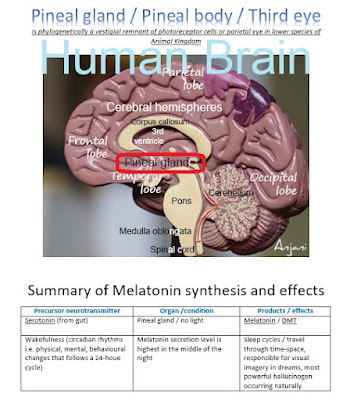
Pineal gland, the mystical third eye

Pineal gland   It is a very small unpaired midline brain structure of endocrine gland, tiny as a rice grain size, situated laterally (anatom...