Tuesday, May 28, 2013

Photosynthesis: new insights

Photosynthesis: Lessons from nature

Photosynthesis is one of nature's finest miracles. Through the photosynthetic process, green plants absorb sunlight in their leaves and convert the photonic energy into chemical energy that is stored as sugars in the plants' biomass. If we can learn from nature and develop an artificial version of photosynthesis we would have an energy source that is absolutely clean and virtually inexhaustible. (September 23, 2011)

Through the miracle of photosynthesis, plants absorb sunlight in their leaves and convert the photonic energy into chemical energy that is stored as sugars in the plants' biomass. (Credit: Photo by Roy Kaltschmidt, Berkeley Lab)

"Solar energy is forecasted to provide a significant fraction of the world's energy needs over the next century, as sunlight is the most abundant source of energy we have at our disposal," says Graham Fleming, Vice Chancellor for Research at the University of California (UC) Berkeley who holds a joint appointment with Lawrence Berkeley National Laboratory (Berkeley Lab). 

"However, to utilize solar energy harvested from sunlight efficiently we must understand and improve both the effective capture of photons and the transfer of electronic excitation energy." 


Photosynthesis: Evolutionary perspective

Photosynthesis is one of the fundamental processes of life on Earth. The evolutionary transition from anoxygenic (no oxygen produced) to oxygenic (oxygen-producing) photosynthesis resulted in the critical development of atmospheric oxygen in amounts large enough to allow the evolution of organisms that use oxygen, including plants and mammals.(April 3, 2012)

Ferns. Photosynthesis is one of the fundamental processes of life on Earth. The evolutionary transition from anoxygenic (no oxygen produced) to oxygenic (oxygen-producing) photosynthesis resulted in the critical development of atmospheric oxygen. One of the outstanding questions of the early Earth is how ancient organisms made this transition. (Credit: © Pontus Edenberg / Fotolia)

Plants and algae, as well as cyanobacteria, use photosynthesis to produce oxygen and "fuels," the latter being oxidizable substances like carbohydrates and hydrogen. There are two pigment-protein complexes that orchestrate the primary reactions of light in oxygenic photosynthesis: photosystem I and photosystem II.

"In photosynthesis, the oxygen is produced at a special metal site containing four manganese and one calcium atom connected together as a metal cluster," explains professor James Allen. "This cluster is bound to the protein called photosystem II that provides a carefully controlled environment for the cluster."

On illumination, two water molecules bound at the cluster are split into molecular oxygen and four protons. Since water molecules are very stable, this process requires that the metal cluster be capable of efficiently performing very energetic reactions.
Allen, Williams and coworkers are trying to understand how a primitive anoxygenic organism that was capable of performing only simple low energy reactions could have evolved into oxygen-producing photosynthesis.
They have been manipulating the reaction center of the purple bacterium Rhodobacter sphaeroides encouraging it to acquire the functions of photosystem II. In the recent publication, they describe how a mononuclear manganese bound to the reaction center has gained some of the functional features of the metal cluster of photosystem II.
Although the mononuclear manganese cannot split water, it can react with reactive oxygen species to produce molecular oxygen. These results suggest that the evolution of photosynthesis might well have proceeded through intermediates that were capable of oxygen production and served until a protein with a bound manganese-calcium cluster evolved. 


Carotenoids Can Capture Blue/Green Light and Pass Energy On to Chlorophylls 

Pigments found in plants and purple bacteria employed to provide protection from sun damage do more than just that. Researchers from the University of Toronto and University of Glasgow have found that they also help to harvest light energy during photosynthesis. (April 4, 2013) 

Advanced optical probes using femtosecond lasers enable light harvesting processes to be examined in exquisite detail. Anticlockwise from top right: Purple bacteria and the structure of the light harvesting complex that gives these cells their distinctive purple color. This special protein incorporates molecules of bacteriochlorophyll and carotenoid to capture the energy from sunlight. The lower part of the figure shows the protein data recorded from two-dimensional laser spectroscopy. (Credit: Evgeny Ostroumov)

A series of experiments showed that a special "dark state" of the carotenoid -- a hidden level not used for light absorption at all -- acts as a mediator to help pass the energy it absorbs very efficiently to a chlorophyll pigment.

Says Scholes. "It is amazing that nature uses so many aspects of a whole range of quantum mechanical states in carotenoid molecules, moreover, and puts those states to use in such diverse ways."

  cientists Swap Key Metal Necessary For Turning Sunlight Into Chemical Energy

Scientists Swap Key Metal Necessary For Turning Sunlight Into Chemical Energy

Photosynthesis is a remarkable biological process that supports life on earth. Plants and photosynthetic microbes do so by harvesting light to produce their food, and in the process, also provide vital oxygen for animals and people.(May 23, 2009)

The reactions that convert light to chemical energy happen in a millionth of a millionth of a second, which makes experimental observation extremely challenging. A premier ultrafast laser spectroscopic detection system established at the Biodesign Institute, with the sponsorship of the National Science Foundation, acts like a high-speed motion picture camera. It splits the light spectrum into infinitesimally discrete slivers, allowing the group to capture vast numbers of ultrafast frames from the components of these exceedingly rapid reactions. These frames are then mathematically assembled, allowing the group to make a figurative "movie" of the energy transfer events of photosynthesis. (Credit: Arizona State University Biodesign Institute)

In all plant chlorophylls, only one particular metal, magnesium, is held tightly within the molecule's center.

During photosynthesis, plants have two photosystems that work in tandem: photosystem I and photosystem II. To peer at the inner workings of photosynthesis, the team used a hardy, well-studied, photosynthetic bacterium called Rhodobacter sphaeroides. An organism similar to this purple bacterium was likely one of the earliest photosynthetic bacteria to evolve. The purple bacteria possess a simplified system similar to photosystem II.

The center stage of photosynthesis is the reaction center, where light energy is funneled into specialized chlorophyll binding proteins. The research team had previously demonstrated that the movement of the reaction center proteins during photosynthesis facilitates the light-driven movement of electrons between molecules in the reaction center, helping the plant or bacteria to harness light energy efficiently even if conditions aren't optimal. Every time the team introduced disruptions into this electron pathway, the proteins were able to compensate by moving and energetically guiding the electrons through their biological circuit. 


Photosynthesis: A new source of electrical energy
Biofuel cell works in cactus

Scientists in France have transformed the chemical energy generated by photosynthesis into electrical energy by developing a novel biofuel cell. The advance offers a new strategy to convert solar energy into electrical energy in an environmentally-friendly and renewable manner. In addition, the biofuel cell could have important medical applications. (February 18,2008) 

Biofuel cell inserted in a cactus and graph showing the course of electrical current as a function of illumination of the cactus (black: glucose, red: O2).

The researchers showed that a biofuel cell inserted in a cactus leaf could generate power of 9 μW per cm2. Because this yield was proportional to light intensity, stronger illumination accelerated the production of glucose and O2 (photosynthesis), so more fuel was available to operate the cell. In the future, this system could ultimately form the basis for a new strategy for the environmentally-friendly and renewable transformation of solar energy into electrical energy. 


Artificial Photosynthesis 

Researchers from the Department of Chemistry at the Royal Institute of Technology (KTH) in Stockholm, Sweden, have managed to construct a molecular catalyzer that can oxidize water to oxygen very rapidly. In fact, these KTH scientists are the first to reach speeds approximating those is nature's own photosynthesis. The research findings play a critical role for the future use of solar energy and other renewable energy sources. (April 12, 2012)

Grass. Scientists have imitated natural photosynthesis and created a record-fast molecular catalyzer. (Credit: © Nejron Photo / Fotolia)

Researchers all over the world, including the US, Japan, and the EU, have been working for more than 30 years on refining an artificial form of photosynthesis. The results have varied, but researchers had not yet succeeded in creating a sufficiently rapid solar-driven catalyzer for oxidizing water.

But now, together with research colleagues, he has imitated natural photosynthesis and created a record-fast molecular catalyzer. The speed with which natural photosynthesis occurs is about 100 to 400 turnovers per seconds. The KTH have now reached over 300 turnovers per seconds with their artificial photosynthesis.

"This is clearly a world record, and a breakthrough regarding a molecular catalyzer in artificial photosynthesis," says Licheng Sun.

"When it comes to renewable energy sources, using the sun is one of the best ways to go," says Sun. 


Artificial Leaf

Scientists have claimed one of the milestones in the drive for sustainable energy -- development of the first practical artificial leaf. Speaking in Anaheim, California at the 241st National Meeting of the American Chemical Society, they described an advanced solar cell the size of a poker card that mimics the process, called photosynthesis, that green plants use to convert sunlight and water into energy. (March 28, 2011)

Living tree leaves. Scientists have just claimed one of the milestones in the drive for sustainable energy -- development of the first practical artificial leaf. (Credit: iStockphoto)


"A practical artificial leaf has been one of the Holy Grails of science for decades," said Daniel Nocera, Ph.D., who led the research team. "We believe we have done it. The artificial leaf shows particular promise as an inexpensive source of electricity for homes of the poor in developing countries. Our goal is to make each home its own power station," he said. "One can envision villages in India and Africa not long from now purchasing an affordable basic power system based on this technology."


Following sites referred thankfully and reference for further detail:

http://www.sciencedaily.com, the journal Analytical Chemistry.

Related blog post link:  

http://sciencedoing.blogspot.in/2013/02/chloroplast-cell-organelle-symbiotic.html

Tuesday, May 21, 2013

Oxidative stress, strain as predisposing factor in pathogenesis

Oxidative stress  
is considered to be involved in a multitude of pathogenic processes 
and is also implicated in the process of aging. 

For the first time, scientists of the  
German Cancer Research Center 
(Deutsches Krebsforschungszentrum, DKFZ
have been able to directly observe  
oxidative changes in a living organism. 

Their findings in fruit flies raise doubts about the validity of some widely held hypotheses: 
The research team has found no evidence that the life span is limited by the production of  
harmful oxidants.

Even though comprehensive studies have failed to provide proof until the present day,  
antioxidants are often advertised as a protection against oxidative stress and, thus, health-promoting. 
Dick and colleagues fed their flies with  
N-acetyl cysteine (NAC)
a substance which is attributed  
an antioxidant effect 
and which some scientists consider suitable for protecting the body against presumably dangerous oxidants. 
Interestingly, no evidence of a decrease in oxidants was found in the NAC-fed flies. 
On the contrary, the researchers were surprised to find that NAC prompted the energy plants of various tissues to significantly increase oxidant production.
Yellow light signals emitted by the biosensor indicate oxidant production 
in the tissue of a migrating fly larva. 
(Credit: Tobias Dick, German Cancer 
Research Center)

 "Many things we observed in the flies with the help of the biosensors came as a surprise to us. It seems that many findings obtained in isolated cells cannot simply be transferred to the situation in a living organism," said Tobias Dick, summarizing their findings. "The example of NAC also shows that we are currently not able to predictably influence oxidative processes in a living organism by pharmacology," he adds. "Of course, we cannot simply transfer these findings from fly to man. Our next goal is to use the biosensors to observe oxidative processes in mammals, especially in inflammatory reactions and in the development of tumors."

Related blog post links for further textual matter: 
http://sciencedoing.blogspot.in/2011/12/oxygen-necessary-evil.html
Following sites referred thankfully and reference for further detail: 
#thankfully shared from http://www.sciencedaily.com

Tuesday, May 14, 2013

Dark Oxidants: Super Oxides in the depth of oceans

Indeed, our bodies aren't perfect. They make mistakes, among them producing toxic chemicals, called oxidants, in cells. We fight these oxidants naturally, and by eating foods rich in antioxidants.
All forms of life that breathe oxygen -- even ones that can't be seen with the naked eye, such as bacteria -- must fight oxidants to live.
"If they don't," says scientist Colleen Hansel of the Woods Hole Oceanographic Institution in Massachusetts, "there are consequences: 
cancer and premature aging in humans, death in microorganisms."
Now researchers have discovered the first light-independent source of superoxide. The key is bacteria common in the depths of the oceans and other dark places.

Now researchers have discovered the first light-independent source of superoxide. The key is bacteria common in the depths of the oceans and other dark places.
 
Superoxide-producing bacteria live
in dark places like the depths of 
Elkhorn Slough, Calif. 
(Credit: Scott Wankel, WHOI)
The result expands the known sources of superoxide to the 95 percent of Earth's habitats that are "dark." In fact, 90 percent of the bacteria tested in the study produced superoxide in the dark.

"Superoxide has been linked with light, such that its production in darkness was a real mystery," says Deborah Bronk of the National Science Foundation's (NSF) Division of Ocean Sciences, which co-funded the research with NSF's Division of Earth Sciences.
"This finding shows that bacteria can produce superoxide in the absence of light."


Following sites referred thankfully and reference for further detail:
#Co-authors of the paper are Julia Diaz and Chantal Mendes of Harvard University, Peter Andeer and Tong Zhang of Woods Hole Oceanographic Institution and Bettina Voelker of the Colorado School of Mines.

Tuesday, May 7, 2013

Dark Matter and Dark Energy

Dark matter...comes from the observation that galaxies should not be able to rotate at the speed they seem to rotate at based on their visible mass alone (and this is a huge effect - approximately 84% of the mass required for our observations seems to be invisible). It's 23% of the mass-energy total in the universe. If dark energy is 73% and dark matter is 23%, then there's only 4% left for the visible mass and energy in the universe, which is amazing. (Alex Kritchevsky on Quora)
Seeing the invisible (observing the dark side of the universe): It seems that most of the universe is made up of mysterious ingredients which we cannot see directly. I will describe in pictures "gravitational lensing", the bending of light by gravity, which is predicted by Einstein's General Relativity.  The dark components of the universe do not emit or absorb light, but do exert a gravitational attraction, and it turns out that gravitational lensing is one of the most promising methods for finding out more about them.(sarah bridle from royalsociety.org)
Importance: "Because the amount of matter and energy in the universe determines the rate of expansion," Dr. Michio Kaku tells us. "We now know there is a lot more dark energy than we previously thought. Therefore, the universe is undergoing an inflationary exponential expansion.  It is in a runaway mode, but here is the catch: we don't know how long that runaway mode is going to last."(brightthink.com)
A whiff of dark matter on the  ISS :
On April 3rd, researchers led by Nobel Laureate Samuel Ting of MIT announced that the Alpha Magnetic Spectrometer, a particle detector operating on board the International Space Station since 2011, has counted more than 400,000 positrons, the antimatter equivalent of electrons.  There’s no danger of an explosion, but the discovery is sending shock waves through the scientific community.
The Alpha Magnetic Spectrometer
mounted outside the
International Space Station.
"These data show the existence of a new physical phenomenon," wrote Ting and colleagues in an article published in the Physical Review Letters. "It could be a sign of dark matter." 
 But where do the positrons come from?  The Universe is almost completely devoid of antimatter,
 One idea is dark matter. Astronomers know that the vast majority of the material Universe is actually made of dark matter rather than ordinary matter. They just don't know what dark matter is.  It exerts gravity, but emits no light, which makes it devilishly difficult to study.
 A leading theory holds that dark matter is made of a particle called the neutralino. Collisions between neutralinos should produce a large number of high-energy positrons, which the AMS should be able to detect with unprecedented sensitivity. (science.nasa.gov) (April 15, 2013)


# for Dark Matter formation fundamental facts, go through the google search ..
amateur  astronomy series
nucleosynthesis
star > white dwarf > black dwarf
neutron star >  black hole> supernova > dark matter

Tuesday, April 30, 2013

Plant communication

Plants are constantly in a process of sharing, talking, communicating among them self, in our surroundings.  

Fundamentally they have intelligence. 

Recent researches have shown very supportive proof regarding this 
communication phenomenon 
in 
plants.


Plants: The oxygen provider: Plants are an integral part of our 'respiratory-cycle', a major player in the give and take mechanism of O2 and CO2, which is so much important for the balance, a must for the existence of all aerobic animals...


Plants: Reducing carbon to carbohydrate: Green plants are the only major trappers of solar radiation, the primary energy source on earth; and then converting them into chemical form.

So, green plants are the 'Primary Producers', again a major player of 'Food Cycle' and 'Energy Cycle' ..


Plant: communication: As LUCA is the same for plants as well as the animals, so the plants are as ancient as we in the our evolutionary journey on this planet. That makes a strong point in the favor of existence of 'some possible communication-skills' among them self and with their neighbors; possibly these plants may be having, which is less explored so far and less understood too.Even some recent studies have indicated so:

#Report 1

Plants do communicate and kin relationship has a bearing: Newly published research in Proceedings of the Royal Society B shows that kin have distinct advantages when it comes to plant communication, just as "the ability of many of many animals to recognize kin has allowed them to evolve diverse cooperative behaviors,"

Ecologist Richard Karban of the UC Davis Department
of Entomology studying kin relationship in sagebrush
says lead researcher and ecologist Richard Karban, a professor in the UC Davis Department of Entomology.
This ability is less well studied for plants until now.
http://phys.org/news/2013-02-communicateand-kin-relationship.html
February 14, 2013


#Report 2

Gabe Popkin
National Geographic News
Published April 15, 2013
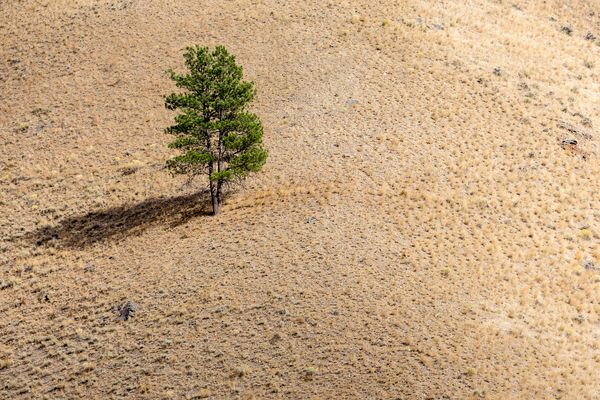
Trees Call for Help—And Now Scientists Can Understand Team identifies the sounds made by drought-stressed trees.
A tree stands alone in the drought-stricken
Salmon-Challis National Forest, Idaho,
in an undated picture.
Photograph by Pete Ryan, National Geographic
When drought hits, trees can suffer—a process that makes sounds. Now, scientists may have found the key to understanding these cries for help.
In the lab, a team of French scientists has captured the ultrasonic noise made by bubbles forming inside water-stressed trees. Because trees also make noises that aren't related to drought impacts, scientists hadn't before been able to discern which sounds are most worrisome. (Watch a video: Drought 101.)
"With this experiment we start to understand the origin of acoustic events in trees," said Alexandre Ponomarenko, a physicist at Grenoble University in France, whose team conducted the research.
This discovery could help scientists figure out when trees are parched and need emergency watering, added Ponomarenko, who presented his team's results last month at an American Physical Society meeting in Baltimore, Maryland.


Plant-human transaction: 
In our own lives....we have found much solace with these plants....be it any hour of the day....perhaps due some 'Communication Message' showered on our own senses....

The Bodhi Tree, also known as Bo (from the Sinhalese Bo), was a large and very old Sacred Fig tree (Ficus religiosa) located in Bodh Gaya (about 100 km (62 mi) from Patna in the Indian state of Bihar), under which Siddhartha Gautama, the spiritual teacher later known as Gautama Buddha, is said to have achieved enlightenment, or Bodhi. In religious iconography, the Bodhi tree is recognizable by its heart-shaped leaves, which are usually prominently displayed.

For young as well as old; plantation is a concern of both generations.

In our evenings of life, when shades are long, plant serve as succor, for the day dreaming....

On a hot sunny day, there is a cool and  fragrant invitation from these creatures, we call plants.

Even in night time, tender tendril is there to convey things un-said in the day hours.
 ********


Tuesday, April 23, 2013

Kingdom Plantae: Alternation of generations

Life scientists have developed several theories to account for the evolution of alternation of generations in plants. One theory has to do with having the “best of both worlds” in terms of variation in a population. In the formation of spores, only one parent contributes the hereditary material. This could be beneficial if that parent exists in a stable environment — it creates offspring with the same characteristics that allowed it to survive and reproduce. 
With sex cells, two parents are involved, and a mixing of hereditary material occurs. 
This results in offspring that vary from both parents and from one another. 
This could be beneficial in a changing environment where some variants are likely to be suited to that environment while others may not be.

All multicellular plants have a life cycle comprising two generations or phases. One is termed the gametophyte, has a single set of chromosomes (denoted 1N), and produces gametes (sperm and eggs). The other is termed the sporophyte, has paired chromosomes (denoted 2N), and produces spores. The gametophyte and sporophyte may appear identical – homomorphy – or may be very different – heteromorphy.

The pattern in plant evolution has been a shift from homomorphy to heteromorphy. The algal ancestors of land plants were almost certainly haplobiontic, being haploid for all their life cycles, with a unicellular zygote providing the 2N stage. All land plants (i.e. embryophytes) are diplobiontic – that is, both the haploid and diploid stages are multicellular. Two trends are apparent: bryophytes (liverworts, mosses and hornworts) have developed the gametophyte, with the sporophyte becoming almost entirely dependent on it; vascular plants have developed the sporophyte, with the gametophyte being particularly reduced in the seed plants.

Moss life cycle diagram
There are two competing theories to explain the appearance of a diplobiontic lifecycle.
The interpolation theory (also known as the antithetic or intercalary theory) holds that the sporophyte phase was a fundamentally new invention, caused by the mitotic division of a freshly germinated zygote, continuing until meiosis produces spores. This theory implies that the first sporophytes bore a very different morphology to the gametophyte they depended on.

Diagram of alternation of generations in ferns
Plant ovules (megagametophytes): Gymnosperm ovule on left, angiosperm ovule (inside ovary) on right
The evolution of syncarps.
a: sporangia borne at tips of leaf
b: Leaf curls up to protect sporangia
c: leaf curls to form enclosed roll
d: grouping of three rolls into a syncarp
Angiosperm life cycle
Double fertilization
This seems to fit well with what is known of the bryophytes, in which a vegetative thalloid gametophyte is parasitised by simple sporophytes, which often comprise no more than a sporangium on a stalk. Increasing complexity of the ancestrally simple sporophyte, including the eventual acquisition of photosynthetic cells, would free it from its dependence on a gametophyte, as seen in some hornworts (Anthoceros), and eventually result in the sporophyte developing organs and vascular tissue, and becoming the dominant phase, as in the tracheophytes (vascular plants). This theory may be supported by observations that smaller Cooksonia individuals must have been supported by a gametophyte generation. The observed appearance of larger axial sizes, with room for photosynthetic tissue and thus self-sustainability, provides a possible route for the development of a self-sufficient sporophyte phase.
The alternative hypothesis is termed the transformation theory (or homologous theory). This posits that the sporophyte appeared suddenly by a delay in the occurrence of meiosis after the zygote germinated. Since the same genetic material would be employed, the haploid and diploid phases would look the same. This explains the behaviour of some algae, which produce alternating phases of identical sporophytes and gametophytes. Subsequent adaption to the desiccating land environment, which makes sexual reproduction difficult, would result in the simplification of the sexually active gametophyte, and elaboration of the sporophyte phase to better disperse the waterproof spores. The tissue of sporophytes and gametophytes preserved in the Rhynie chert is of similar complexity, which is taken to support this hypothesis.

#graphics thankfully shared from wikipedia.org


Tuesday, April 16, 2013

Genetic base in evolution of Oogamy and origin of male-female differentiation

Japanese researchers found the genetics basis of sex dimorphism (two genders) by investigating two closely related species of green algae that practice different forms of sexual reproduction.


Human egg cell
So, how did sex cells modify to eggs and sperm? It seems that a gene underlying a more primitive system of reproduction was likely co-opted during evolution to participate in sex-specific sperm development. 

The Japanese team found a genetic connection between male sexuality of an oogamous multicellular green algae species, Pleodorina starrii, and one of the mating types of a more primitive isogamous unicellular alga Clamydomonas reinhardtii. In C. reinhardtii, isogamy occurs through "plus" (MT+) and "minus" (MT-) mating types. MT- represents a "dominant sex" due to a particular gene, MID ("minus-dominance"), both necessary and sufficient to cause the cells to differentiate as MT- isogametes. However, no sex-specific genes related to MID had been identified in closely related oogamous species.


Human sperm cell
But now the scientists have successfully identified a version of the MID gene in Pleodorina starrii. This "PlestMID" gene is present only in the male genome, and it encodes a protein abundant in the nuclei of mature sperm. This means that P. starrii maleness evolved from the dominant sex (MT-) of its isogamous ancestor. This breakthrough discovery can answer many questions about the evolution of oogamy and the origins of male-female differentiation.

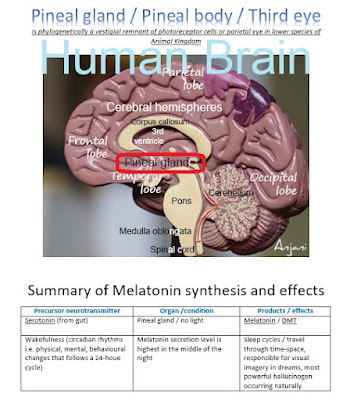
Pineal gland, the mystical third eye

Pineal gland   It is a very small unpaired midline brain structure of endocrine gland, tiny as a rice grain size, situated laterally (anatom...