Wednesday, October 10, 2012

Quantum World 2012

Particle Physics

(The subatomic particles)

Quantum physics studies the behavior of the fundamental building blocks of the universe at a scale smaller than atoms, when tiny particles act in strange ways that can only be described with advanced mathematics.

A Nobel prize for being in two places at once !!

U.S. physicist David Wineland and France's Serge Haroche share the 2012 Nobel Prize in physics for doing what Wineland once described as a scientific parlour trick.

The 2012 Nobel Prize in Physics was awarded jointly to Serge Haroche and David J. Wineland "for ground-breaking experimental methods that enable measuring and manipulation of individual quantum systems".

 A physicist at the National Institute of Standards and Technology, part of the U.S. Commerce Department, Wineland was cited for trapping electrically-charged atoms, or ions, and controlling and measuring them with light particles, or photons.Haroche of the College de France did similar work.

Tue Oct 9, 2012

Pictures of the 2012 Nobel Prize for Physics laureates Serge Haroche (L) of France and David Wineland of the U.S. are displayed on a screen during a news conference at the Royal Swedish Academy of Science in Stockholm, October 9, 2012.
Credit: Reuters/Bertil Enevag Ericson/Scanpix
Door to a new era: The Nobel Laureates have opened the door to a new era of experimentation with quantum physics by demonstrating the direct observation of individual quantum particles without destroying them. For single particles of light or matter the laws of classical physics cease to apply and quantum physics takes over. But single particles are not easily isolated from their surrounding environment and they lose their mysterious quantum properties as soon as they interact with the outside world. Thus many seemingly bizarre phenomena predicted by quantum physics could not be directly observed, and researchers could only carry out thought experiments that might in principle manifest these bizarre phenomena.
Through their ingenious laboratory methods Haroche and Wineland together with their research groups have managed to measure and control very fragile quantum states, which were previously thought inaccessible for direct observation. The new methods allow them to examine, control and count the particles.

Observations: "Single particles are not easily isolated from their surrounding environment, and they lose their mysterious quantum properties as soon as they interact with the outside world," the Nobel committee explained.
"Through their ingenious laboratory methods Haroche and Wineland, together with their research groups, have managed to measure and control very fragile quantum states, which were previously thought inaccessible for direct observation. The new methods allow them to examine, control and count the particles."
Both scientists work in the field of quantum optics, studying the fundamental interactions between light and matter. The Nobel committee said they used opposite approaches to the same problem: Wineland uses light particles - or photons - to measure and control particles of matter - electrons - while Haroche uses electrons to control and measure photons.
In the quantum world discovered by Niels Bohr, Erwin Schroedinger and other giants of early 20th-century physics, tiny objects such as electrons can be in two places at once, and can behave as a particle one moment and as a wave the next, depending on how an observer tries to measure it.In other words, the mere act of observation determines which form they take and even what reality is.Superposition was supposed to exist only in a quantum world inaccessible to real-world experiments.
Wineland achieved it in the lab. When he hit the atom with half of the light needed to move it, it was simultaneously immobile and in motion, until eventually it was in two locations, 80 nanometers (billionths of a meter) apart, at the same time.
# In one of the strange properties of quantum mechanics, tiny particles act as if they are simultaneously in two locations, based on the likelihood that they would be found at either, known as a "superposition".

A quantum computer for your desk, much less your mobile phone, is still many years away: in Wineland's laboratory in Boulder, Colorado, electrically charged atoms or ions are kept inside a trap by surrounding them with electric fields. The particles are isolated from the heat and radiation in their environment by performing the experiments in vacuum at extremely low temperatures.
But some of the materials needed to build quantum devices have already been synthesized.
Some companies, like MagiQ in the U.S. and Swiss firm ID Quantique, are already selling quantum cryptography equipment that allows unhackable communication using the same fundamental theory.
# In a normal computer, a switch must either be on or off. A quantum computer would work with switches that, like the particles in Wineland's experiment, behaved as if they were in more than one position at the same time.
An example is a computer trying to work out the shortest route around town for a travelling salesman. A traditional computer might try every possible route and then choose the shortest. A quantum computer could do the calculation in one step, as if the salesman travelled each route simultaneously.


Tuesday, October 9, 2012

Adult Stem Cell Discovery 2012

Great Promising Researches !!
for the discovery that mature cells can be reprogrammed to become pluripotent.

Announcement of the 2012 Nobel Prize in Physiology or Medicine !!
UK, Japan scientists win Nobel for adult stem cell discovery 
                                                                 October 8th, 2012
John Gurdon, 79, of the Gurdon Institute in Cambridge, Britain and Shinya Yamanaka, 50, of Kyoto University in Japan, discovered ways to create tissue that would act like embryonic cells, without the need to collect the cells from embryos.

 
"My own personal belief is that we will, in the end, understand everything about how cells actually work ..."
Sir John B. Gurdon
#As far back as 1962 Gurdon became the first scientist to clone an animal, making a healthy tadpole from the egg of a frog with DNA from another tadpole's intestinal cell. That showed that developed cells carry the information to make every cell in the body - decades before other scientists made world headlines by cloning the first mammal from adult DNA, Dolly the sheep.

"My goal, all my life, is to bring this stem cell technology to the bedside, to patients, to clinics ..."
Shinya Yamanaka
# More than 40 years later, Yamanaka produced mouse stem cells from adult mouse skin cells by inserting a small number of genes. His breakthrough effectively showed that the development that takes place in adult tissue could be reversed, turning adult tissue back into cells that behave like embryos.
Front side (obverse) of the Nobel Prize Medal

 Scientists from Britain and Japan shared a Nobel Prize on Monday for the discovery that adult cells can be transformed back into embryo-like stem cells that may one day regrow tissue in damaged brains, hearts or other organs.

Shinya Yamanaka (right) and John B Gurdon (left), the winners of the 2012 Nobel prize in physiology or medicine. Photograph: Agencies

Nobel prize in physiology or medicine 2012: as it happened

• John B Gurdon and Shinya Yamanaka have won the 2012 Nobel prize in physiology or medicine
• Gurdon worked out that cells could be reprogrammed into a more immature state in 1962
• In 2006, Yamanaka worked out how to turn mature cells in mice into stem cells by introducing a few genes
• Yamanaka's 'induced pluripotent stem cells' removed the need to use live human embryos to create versatile stem cells
Transforming the field of "regenerative medicine":"These groundbreaking discoveries have completely changed our view of the development and specialization of cells," the Nobel Assembly at Stockholm's Karolinska Institute said.
 Now:"We would like to be able to find a way of obtaining spare heart or brain cells from skin or blood cells. The important point is that the replacement cells need to be from the same individual, to avoid problems of rejection and hence of the need for immunosuppression."
And: 1. "You can't take out a large part of the heart or the brain or so to study this, but now you can take a cell from, for example, the skin of the patient, reprogramme it, return it to a pluripotent state, and then grow it in a laboratory," he said
2. "The second thing is for further ahead. If you can grow different cell types from a cell from a human, you might - in theory for now but in future hopefully - be able to return cells where cells have been lost."
3. Thomas Perlmann, Nobel Committee member and professor of Molecular Development Biology at the Karolinska Institute said: "Thanks to these two scientists, we know now that development is not strictly a one-way street."
4. "There is lot of promise and excitement, and difficult disorders such as neurodegenerative disorders, like perhaps Alzheimer's and, more likely, Parkinson's disease, are very interesting targets."
5. Asked why he still keeps his schoolteacher's discouraging report, Gurdon said: "When you're having problems, like when an experiment doesn't work - which often happens - it's nice to remind yourself that perhaps after all you're not so good at this job and the schoolmaster may have been right."
# Gurdon spoke of his own unlikely career as a young man who loved science but was steered away from it at school, only to take it up again at university.
He still keeps an old school report in a frame on his desk: "I believe he has ideas about becoming a scientist... This is quite ridiculous," his teacher wrote. "It would be a sheer waste of time, both on his part and of those who have to teach him."

Apprehensions: 1.The science of iPS cells is still in early stages. Among concerns is the fear that implanted cells could grow out of control and develop into tumors.
Stem cells created from adult tissue are known as "induced pluripotency stem cells", or iPS cells.
2. Some scientists say stem cells from embryos may prove more useful against disease than iPS cells, and the ethics of working with embryos should be defended.


About:
Sir John B. Gurdon was born in 1933 in Dippenhall, UK. He received his Doctorate from the University of Oxford in 1960 and was a postdoctoral fellow at California Institute of Technology. He joined Cambridge University, UK, in 1972 and has served as Professor of Cell Biology and Master of Magdalene College. Gurdon is currently at the Gurdon Institute in Cambridge.
Shinya Yamanaka was born in Osaka, Japan in 1962. He obtained his MD in 1987 at Kobe University and trained as an orthopaedic surgeon before switching to basic research. Yamanaka received his PhD at Osaka City University in 1993, after which he worked at the Gladstone Institute in San Francisco and Nara Institute of Science and Technology in Japan. Yamanaka is currently Professor at Kyoto University and also affiliated with the Gladstone Institute.


Key publications:

Gurdon, J.B. (1962). The developmental capacity of nuclei taken from intestinal epithelium cells of feeding tadpoles. Journal of Embryology and Experimental Morphology 10:622-640.
Takahashi, K., Yamanaka, S. (2006). Induction of pluripotent stem cells from mouse embryonic and adult fibroblast cultures by defined factors. Cell 126:663-676.

History of
The Nobel Prize in Physiology or Medicine

 “The said interest shall be divided into five equal parts, which shall be apportioned as follows: /- - -/ one part to the person who shall have made the most important discovery within the domain of physiology or medicine ...” 
(Excerpt from the will of Alfred Nobel)
Alfred Nobel had an active interest in medical research. Through Karolinska Institutet he came into contact with Swedish physiologist Jöns Johansson around 1890. Johansson worked in Nobel’s laboratory in Sevran, France for a time that year. Physiology or medicine was the third prize area Nobel mentioned in his will.
In 1901, Emil von Behring was awarded the first Nobel Prize in Physiology or Medicine for his work on serum therapy, particularly for its use in the treatment of diphtheria. The Medicine Prize has subsequently highlighted a number of important discoveries including penicillin, genetic engineering and blood-typing.
The Nobel Prize in Physiology or Medicine is awarded by the Nobel Assembly at Karolinska Institutet, Stockholm, Sweden.


A point for the school teachers ....and do you think about whether your words might stay with children a long time? John Gurdon, still remember what teachers said about him – and what effect their words had on his life ??

#The popular idea that a child forgets easily is not an accurate one. Many people go right through life in the grip of an idea which has been impressed on them in very tender years.
Agatha Christie (1890-1976)

Nobel prizewinner Sir John Gurdon speaks at a press conference on Monday. His biology teacher described his ambitions to become a scientist as 'a sheer waste of time'.

A British researcher whose schoolboy ambition to become a scientist was dismissed as "quite ridiculous" by his Eton schoolmaster has won a Nobel prize for work that proved adult cells can be reprogramed and grown into different tissues in the body.

According to his Eton schoolmaster, the 15-year-old Gurdon did not stand out as a potential scientist. Writing in 2006, Gurdon quoted a school report as saying: "I believe Gurdon has ideas about becoming a scientist; on his present showing this is quite ridiculous; if he can't learn simple biological facts, he would have no chance of doing the work of a specialist, and it would be a sheer waste of time, both on his part and of those who would have to teach him."

That year, Gurdon scored the lowest mark for biology in his year at Eton. "Out of 250 people, to come bottom of the bottom form is quite something, and in a way the most remarkable achievement I could have been said to make," he said.

 The scientist, who was knighted in 1995, narrowly avoided military service when he caught a cold and his doctor decided it might be helpful to diagnose bronchitis. Gurdon received a message from the army assigning him to latrine cleaning and peeling potatoes, but was later told he was not needed.

Gurdon's breakthrough came in 1962 at Oxford University, when he plucked the nucleus from an adult intestine cell and placed it in a frog's egg that had had its own nucleus removed. The modified egg grew into a healthy tadpole, suggesting the mature cell had all the genetic information needed to make every cell in a frog. Previously, scientists had wondered whether different cells held different gene sets.

Sunday, October 7, 2012

Sound Wave

 *sound science series # 1 
The nature of a sound wave: Sound is a Mechanical Wave; Sound is a Longitudinal Wave; Sound is a Pressure Wave.
Sound is a mechanical wave that is an oscillation of pressure transmitted through a solid, liquid, or gas, composed of frequencies within the range of hearing.
  • Sound waves are characterized by the motion of particles in the medium and are called mechanical waves.     

  • Waves are created due to: 
  1. Compression - region of high pressure or density and
  2. Rarefaction - region of low pressure or density.
  • Pressure is related to the number of particles of a medium in a given volume.
  • Propagation of sound can be visualized as propagation of density variation or pressure variation in the medium.
  • These waves are called longitudinal waves. In these waves the individual particles of the medium move in a direction parallel to the direction of propagation of the disturbance. The particles do not move from one place to another but they simply oscillate back and forth about their position of the rest. This is exactly how a sound wave propagate, hence sound waves are longitudinal waves.
 Wavelength: The distance between two consecutive compression (C) or two consecutive refraction is called the wavelength. 
  •  Wavelength is a measure of the distance between repetitions of a shape feature such as peaks, valleys, or zero-crossings, not a measure of how far any given particle moves.
  •  Wavelength is commonly designated by the Greek letter lambda (λ): The SI unit of wavelength is the meter.


wavelength

  
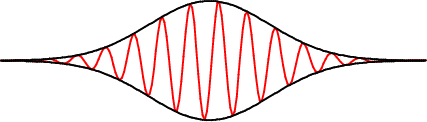
Wave packet: A wave packet refers to the case where two (or more) waves exist simultaneously. A wave packet is often referred to as a wave group.
  •  A composition of several waves of different wavelength can produce a wave packet. 
  •  The average wave is also called the carrier wave. 
  •  This situation is permitted by the principle of superposition. This principle states that if any two waves are a solution to the wave equation then the sum of the waves is also a solution. This principle holds only for linear systems.
A wave packet
  
A simple experiment demonstrating that sound waves need a medium to travel:

                                                                 
a simple experiment to show that sound needs a medium to travel

*Note: all pictures thankfully shared from various sources..


Saturday, September 22, 2012

Free Radicals: Cause And Concern

POLLUTION, STRESS AND FAULTY FOOD HABITS > FREE RADICALS > OXIDATIVE STRESS > INCREASED CELL DAMAGE.

Mounting scientific evidence may support the important role of free radicals in the development of some diseases. 

Free radicals are molecules or atoms that have at least one unpaired electron which usually increases the chemical reactivity of the molecule. 

Environmental radiation/stress/many other pollutants and physiological processes in the body cause free radicals to form. 


Free radicals can react with other molecules to cause cell damage or DNA mutation. 


Molecules called antioxidants protect against free radical damage. 
When antioxidants are ineffective, enzymes produced by the body work to repair free radical damage. 


Higher levels of free radicals tend to cause increased cellular damage. This effect is called oxidative stress. Oxidative stress may contribute to cardiovascular disease and cancer. 

Chemical compounds found in some foods may decrease the accumulated effects of oxidative stress, thus helping to prevent disease. 

Free Radicals: Atoms contain a nucleus, and electrons move around the nucleus, usually in pairs. A free radical is any atom or molecule that contains one or more unpaired electrons.
           The unpaired electrons alter the chemical reactivity of an atom or molecule, usually making it more reactive than the corresponding non-radical. However, the actual chemical reactivity of radicals varies enormously. 
           The hydrogen radical ([H.sup.*], the same as a hydrogen atom), which contains 1 proton and 1 electron (therefore unpaired), is the simplest free radical. Free-radical chain reactions are often initiated by removal of [H.sup.*] from other molecules. A superscripted dot is used to denote free radicals. 
Free radicals and chain reaction:  Most molecules in the body are not radicals. Hence any reactive free radical generated is likely to react with a non-radical. When a free radical reacts with a non-radical, a free-radical chain reaction results and new radicals are formed. Figure 1 shows two important reactions of this type. Attack of reactive radicals on membranes or lipoproteins starts lipid peroxidation, which is particularly implicated in the development of atherosclerosis. If hydroxyl radicals are generated close to DNA, they can attack the purine and pyrimidine bases and cause mutations. For example, guanine is converted into 8-hydroxyguanine and other products.


Free radicals and premature aging: Air pollutants rob skin cells of oxygen and cause free radical production in the skin. This, in combination with UV radiation decreases the production of collagen and elastin, causing the skin to thin and lose elasticity, leading to sagging skin, fine lines, and wrinkles.

Free radicals and diseases: Free radicals are capable of damage biomolecules, provoke immune response, activate oncogens, cause atherogenesis and enhance ageing process. However, in healthy conditions nature has endowed human body with enormous antioxidant potential. Subtle balance exists between free radical generation and antioxidant defence system to cope with oxidative stress by various enzymes and vitamins at cellular level which prevent the occurrence of disease. However, factors tilting the balance in favour of excess free radicals generation lead to widespread oxidative tissue damage and diseases. Therefore, trouble starts when there is an excess of free radicals and the defence mechanism lags behind. Overwhelming production of free radicals in response to exposure to toxic chemicals and ageing may necessitate judicious antioxidant supplement to help alleviate free radical mediated damage.
tropospheric mean concentrations of (a) O3, (b) OH, (c) H2O2 and (d) the surface Δ17O(SO42-).  The measurement locations are shown in (a).
Free radicals with pollutants: Highly reactive molecules called free radicals can cause tissue damage by reacting with polyunsaturated fatty acids in cellular membranes, nucleotides in DNA, and critical sulfhydryl bonds in proteins. Free radicals can originate endogenously from normal metabolic reactions or exogenously as components of tobacco smoke and air pollutants and indirectly through the metabolism of certain solvents, drugs, and pesticides as well as through exposure to radiation. There is some evidence that free radical damage contributes to the etiology of many chronic health problems such as emphysema, cardiovascular and inflammatory diseases, cataracts, and cancer. Defenses against free radical damage include tocopherol (vitamin E), ascorbic acid (vitamin C), beta-carotene, glutathione, uric acid, bilirubin, and several metalloenzymes including glutathione peroxidase (selenium), catalase (iron), and superoxide dismutase (copper, zinc, manganese) and proteins such as ceruloplasmin (copper). The extent of tissue damage is the result of the balance between the free radicals generated and the antioxidant protective defense system. Several dietary micronutrients contribute greatly to the protective system. Based on the growing interest in free radical biology and the lack of effective therapies for many of the chronic diseases, the usefulness of essential, safe nutrients in protecting against the adverse effects of oxidative injury warrants further study.

Free radicals with oily fried foods (through lipid oxidation): Modern industrial environments, lifestyles and poor nutrition contribute heavily to Free Radical production.  When the body is low on antioxidants Free Radicals increase.  Additionally, unprotected exposure to the sun produces Free Radicals in the skin, mental and emotional stress are key causes of Free Radicals, as is smoking, the taking of drugs of any kind (including alcohol), cooked oils or fats, exposure to petrochemicals, heavy metalsand even excess adrenaline or insulin all take part in Free Radical production in our bodies.

WHAT CAN STOP A FREE RADICAL? (ANTIOXIDANTS): A free radical is stopped when the electron difference (gaining or losing an electron) is corrected.  Molecules that can correct the electron difference are called Antioxidants.  The process of damage by Free Radicals is called oxidation (think rust on metal or the browning of a cut apple), and the process that prevents it is anti-oxidation, and the molecules which do the prevention are called Antioxidants. Antioxidants are found in dark colored vegetables and fruit and in dietary supplements. The life of a free radical has three stages: the initiation stage, propagation stage, and finally the termination stage. Free radicals are terminated or neutralized by nutrients (antioxidants), enzymatic mechanisms, or by recombining with each other.


Related blog post links:
http://sciencedoing.blogspot.in/2013/05/dark-oxidants-super-oxides-in-depth-of.html
http://sciencedoing.blogspot.in/2011/12/oxygen-necessary-evil.html
*Note: all pictures thankfully shared from various sources..

Thursday, September 20, 2012

Civilization Threat: Pollution

Humans have lived so happily ever since 200,000 years of their existence on this planet, until this last 250 years of short period which saw the sea through change in their life style. This extreme change is taking us to the door of our own doom. Our bodies have become the store house of pollutants mixed in air, water and food and the results: we are living with life threatening diseases. 
Still we have time only if awaken to the threat on our door, knocking one last time, for grasping opportunity to save our own survival on this beautiful blue planet of ours !!

200,000 years of human existence of peace & happiness
Humans (Homo sapiens) are primates of the family Hominidae, and the only living species of the genus Homo. They originated in Africa, where they reached anatomical modernity about 200,000 years ago and began to exhibit full behavioral modernity around 50,000 years ago.
This was the period when human lived with his basic needs and  happiness.


Earliest Civilizations
The four earliest civilizations - Mesopotamian, Egyptian, Indian, and Chinese - arose between c. 3100 B.C. and c. 1500 B.C., in each case in the valley of a great river system. 
If you have willed to watch India thousands years back, Lothal is perfect place for you. It is the first Indian port of Indus valley Civilization between 1800-2400 B.C. it shows the knowledge of the ancient India about town planning. Research says that Indian subcontinent made trades with Egypt, Persia and Mesopotamia from this place. Discovery and research also says that it may be usual to have two bodies in single grave as researchers found three such graves here. Apart from this, 4000 years old seals of Indus valley, terracotta items and other ancient stone jewellery had also been found at this place.
                                          
Last 250 years journey of bad and ugly
In documented history of humans, it's about 250 years of time in total, when they set their foot in a period called the Industrial Revolution, where changes in agriculture, manufacturing, mining, transportation, and technology had a profound effect on the social, economic and cultural condition of the times. It began in the United Kingdom, then subsequently spread throughout Western Europe, North America, Japan, and eventually the rest of the world. 
                                                    
                                                  
The Era of Sustainability: The Next Revolution
Looking back at the beginning of the Industrial Revolution, it is difficult to realize how and what took place then is having such complicated and vast effects today. This is the principle of environmental unity – a change in one system will cause changes in others. Certainly, the seeds of progress – and the ramifications of that progress – were planted then. And with the very same mechanisms and effects that brought about both the progress and the indelibly connected results of that progress to our ecology – the good, the bad and the ugly – over the last 250 years, we are entering a new era of sustainability. 

Human body tissue (adipose); the storage ground for toxins
colored scanning electron micrograph of fat tissue
An alarming Report
Once upon a time, the Environmental Protection Agency (EPA) conducted a program called the National Human Adipose Tissue Survey (NHATS). In 1982 and again in 1987 it analyzed human fat samples from cadavers obtained throughout the country, looking for the types of toxins that accumulate in human fat. Four industrial solvents and one dioxin were found in 100 percent of the fat samples6. Nine more chemicals, including three more dioxins and one furan were found in more than 90 percent of the fat samples. In general, 83 percent of the fat samples contained PCBs. U.S. researchers have confirmed the presence of multiple toxins in human fat7 associated with obesity risk. The EPA has confirmed the presence of these chemicals as pollution in the farm soil across America .
Overview of main health effects on humans from some common types of pollution.(pic courtesy share)

Points to ponder: 
1. The result of life style: We expect our bodies to accept all sort of life style so easily. We never think that's not possible without a resistance.  
In fact, the way or body opposes the artificial and modern lifestyle is  - heart, asthma and cancer like serious diseases.
2. Risk for heart: Heart disease is primarily due to our diet. Once we eat fried food, then this oxidized oil releases free radicals in to our blood vessels, which not only causes heart disease but may be our whole body is at risk.
3. Water pollution is a serious problem: Major source of water pollution is industrial waste and  city sewage which is carried directly into rivers, agricultural and industrial products adds to the problem. Polluted water causes many serious diseases like cholera, diarrhea, tuberculosis and enteric infections.
4. Free radicals are dangerous: Dangerous factors of pollutants present in the body are the free radicals.(A free radical is any molecule that has an odd number of electrons. Free radicals, which can occur in both organic (i.e., quinones) and inorganic molecules (i.e., O(2)), are highly reactive and, therefore, transient. Free radicals are generated in vivo as by products of normal metabolism. They are also produced when an organism is exposed to ionizing radiation, to drugs capable of redox cycling, or to xenobiotics that can form free radical metabolites in situ. Cellular targets at risk from free radical damage depend on the nature of the radical and its site of generation.)
 Theincreases with increasing pollutants in the body and can cause trouble. Free radicals are the cause of diseases like heart, cancer, gout, diabetes, cataract. These not only make us sick, but also accelerate the aging process.
5. Greater risk of air pollution: As compared to non-industrialized areas, the industrialized places are having much higher increasing trends of diseases like various types of cancer, skin ailments, birth defects and chromosomal inequality. Pulmonary, digestive, blood pressure and infectious diseases have increased manifold.


*Note: pics thankfully shared from various sources.                                                           


Saturday, September 15, 2012

Science Through Fiction Pages: Acceptable Risk

Italo Calvino


A bookworm
It happens so often that we prove our self a perfect bookworm when we communicate so much with the subject that the book becomes a reporting page with all the allied branches of human knowledge converging to, in a particular time and space of ours.

Acceptable Risk  
A 1994 Robin Cook's best selling medical thriller, which narrates the story of a young researcher isolating a stunningly effective anti-depressant from a mould first uncovered over 200 years ago. But there is more to the drug than anyone could have imagined....

 And when we love some subject, then the book becomes classic of it's own kind as it starts saying through our inscriptions on the same very pages of it !!

Some other source of alkaloid in nature
A curiosity took me to see Chem. Abstr. 1961,16915p and 1964, 60, 3945 p to know that this D-Lysergamide whose molecular formula is C20H25N3O

And these chemical actually mimic the brain actions causing hallucination and delusions, which also found in :
# Ipomea tricolor (Syn. I. violaceae) morning glory, family Convolvulaceae. Ergot alkaloid in seeds, producing psychosis like state.
# Ergot disease of rye due to fungus Claviceps purpurea, may cause....
# Ergotism in humans 


The mystery molecule
The book amazes most as we find that: 
the molecular structure of the central character of this novel on a super computer by a new structural software, which reveals that:

Four ringed structural core of the compound, with five side chains, one was tetra cyclic and resembled LSD, another had two rings and resembled drug called Scopolamine. The last three resembled the brain's major neurotransmitters: norepinephrine, dopamine and serotonin.


Structural details of Central Nervous System of humans, mid brain highlighted
 Our central Nervous system
And of course when it comes to Central Nervous System, brain and out of it's three major parts: Prosencephalon, Mesencephalon and Rhombencephalon;  
Mid brain i.e. Mesencephalon is focused in the story as this part deals with Reflex and Instinct.


A Neuron body and mid brain in detail which controls the instinct and reflexes
Our mid brain is a mystery place
Perhaps the young researchers have had the 'Shakes' belief that 'body can achieve, what mind can conceive'

Between the synapses of Neuron lies the chemical code transaction and this was the place where LSD mimics the brain. 

Extremely amazing cells are Neuron as they conduct electrical impulses up to synapses. 100 A° thickness of the neuron cell bears 70 to 90 millivolt of resting potential which is equal to 100,000 volt per centimeter. Amazing bio insulator is the plasma membrane.

Well, mid brain is going to play a major role here as this is also the part of brain of our ancestors of Jurassic period, need less to say that we humans are the carriers of Reptilians brain structure. 

So reptilian traits are going to be enhanced in this story due to this intake of chemical being tested on them self....as this is the part which deals with Instinct and Reflexes.


Some relevant references of those times
Science In The News: Voice Of America: 5th March 1996, Tuesday
 Tobacco and Asbestos are known to cause Cancer. Earlier studies found that Beta Carotine (which breaks in to Vitamin A in our digestive system) have preventive effect in such cases only when taken in natural form, not in the form of pills.

So isolation from the fungus extract, the pure form of LSD-25 was sure as going to cause a havoc in the story..........this way or that !!


Some relevant references of those times
 Science In The News: Voice Of America: 5th March 1996: Tuesday
Food and Drug Administration (USA) approved a synthetic 'fat substitute' developed by Proctor and Gamble scientist after 20 years of research studies, altering the molecular structure of Sugar, adding fat in it's side chain, recommending to use as snacks (with potato chips), named Olestra (derived from Olein), 30 grams of which may give 10 grams of fat (vitamin A,D,E,K to be added along with), passing through human system as Carbose without recognizing and storing (by body) it as fat.

But alarming is this human endeavor as: certain studies say it may cause stomach pain and mild diarrhea and further warned ----it may cause heart disease and cancer.

All kind of possible alarming hazards were put aside by the team of these young researchers in this book.


Kim (she) and Edward (he); Central human characters from the book:
They identified their identical identities, but the mould which molded their destinies on unidentical tracks.


The end of the story: 
Fallacy/Irony/Tragedy........hard to choose from !!


And if I were Kim and Edward, both characters of this book 'Acceptable Risk', I had to put my feelings in a poem as below to express myself:

Someday
I would crumble down
Due my own sins,
And it's sheer pressure
Will cause me to
Turn in to the matter
----Like white dwarfs
----In to the dark matter
----To become a part of the universe
----Which is 90 percent
----Yet unseen !!
(Anjani)


Molecular structure of alkaloid D-Lysegamide

Notes related:
Dr. Robin Cook: is an American physician and novelist who writes about medicine and topics affecting public health. To date, he has explored issues such as organ donation, genetic engineering, fertility treatment, in - vitro fertilization, research funding, managed care, medical malpractice, medical tourism, drug research, and organ transplantation.[8] 
Some notes about or by author: # I joke that if my books stop selling, I can always fall back on brain surgery," he says. "But I am still very interested in it. If I had to do it over again, I would still study medicine. I think of myself more as a doctor who writes, rather than a writer who happens to be a doctor." He explained the popularity of his works thus: "The main reason is, we all realize we are at risk. We're all going to be patients sometime," he says. "You can write about great white sharks or haunted houses, and you can say I'm not going into the ocean or I'm not going in haunted houses, but you can't say you're not going to go into a hospital.[7]
# Cook says he chose to write thrillers because the forum gives him "an opportunity to get the public interested in things about medicine that they didn't seem to know about. I believe my books are actually teaching people."[8]
# The author admits he never thought that he would have such compelling material to work with when he began writing fiction in 1970. "If I tried to be the writer I am today a number of years ago, I wouldn't have very much to write about. But today, with the pace of change in biomedical research, there are any number of different issues, and new ones to come," he says.[7]

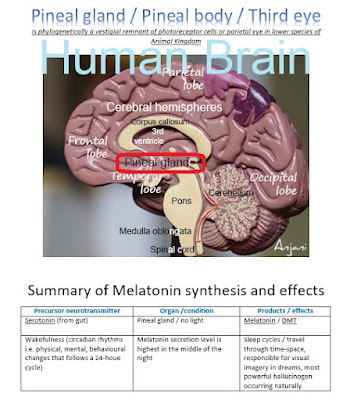
Pineal gland, the mystical third eye

Pineal gland   It is a very small unpaired midline brain structure of endocrine gland, tiny as a rice grain size, situated laterally (anatom...