Showing posts with label Global Warming. Show all posts

Tuesday, January 8, 2013

Andean civilizations, Inca Empire and Global Warming

Spanish rule ended or transformed many elements of the Andean civilizations notably influencing religion and architecture.

Today climate change is melting glaciers that allowed the Incan canal system to work, threatening current water supplies throughout the Andes.

Inca Empire was the largest empire in pre-Columbian America. The administrative, political and military center of the empire was located in Cusco in modern-day Peru. The Inca civilization arose from the highlands of Peru sometime in the early 13th century.
Inca expansion (1438–1533)

Andean civilization probably began c. 9500 BP. Based in the highlands of Peru, an area now referred to as the punas, the ancestors of the Incas probably began as a nomadic herding people. Geographical conditions resulted in a distinctive physical development characterized by a small stature and stocky build. Men averaged 1.57 m (5'2") and women averaged 1.45 m (4'9"). Because of the high altitudes, they had unique lung developments with almost one third greater capacity than other humans. The Incas had slower heart rates, blood volume of about 2 l (four pints) more than other humans, and double the amount of hemoglobin which transfers oxygen from the lungs to the rest of the body.
Archaeologists have found traces of permanent habitation as high as 5,300 m (17,400 ft) above sea level in the temperate zone of the high altiplanos. While the Conquistadors may have been a little taller, the Inca surely had the advantage of coping with the extraordinary altitude. It seems that civilizations in this area before the Inca have left no written record, and therefore the Inca seem to appear from nowhere, but the Inca were a product of the past. They borrowed architecture, ceramics, and their empire-state government from previous cultures.
In the Lake Titikaka region, Tiwanaku is recognized by Andean scholars as one of the most important precursors to the Inca Empire, flourishing as the ritual and administrative capital of a major state power for approximately 500 years.
Sacsayhuamán, the Inca stronghold of Cusco
 The Spanish installed Atahualpa's brother Manco Inca Yupanqui in power; for some time Manco cooperated with the Spanish, while the Spanish fought to put down resistance in the north. Meanwhile an associate of Pizarro's, Diego de Almagro, attempted to claim Cusco for himself. Manco tried to use this intra-Spanish feud to his advantage, recapturing Cusco in 1536, but the Spanish retook the city afterwards. Manco Inca then retreated to the mountains of Vilcabamba, Peru, where he and his successors ruled for another 36 years, sometimes raiding the Spanish or inciting revolts against them. In 1572 the last Inca stronghold was conquered, and the last ruler, Túpac Amaru, Manco's son, was captured and executed. This ended resistance to the Spanish conquest under the political authority of the Inca state.
A view of Machu Picchu
 After the fall of the Inca Empire many aspects of Inca culture were systematically destroyed, including their sophisticated farming system, known as the vertical archipelago model of agriculture. Spanish colonial officials used the Inca mita corvée labor system for colonial aims, sometimes brutally. One member of each family was forced to work in the gold and silver mines, the foremost of which was the titanic silver mine at Potosí. When a family member died, which would usually happen within a year or two, the family would be required to send a replacement.
Banner of the Incas.
The effects of smallpox on the Inca empire were even more devastating. Beginning in Colombia, smallpox spread rapidly before the Spanish invaders first arrived in the empire. The spread was probably aided by the efficient Inca road system. Within a few years smallpox claimed between 60% and 94% of the Inca population, with other waves of European disease weakening them further. Smallpox was only the first epidemic. Typhus (probably) in 1546, influenza and smallpox together in 1558, smallpox again in 1589, diphtheria in 1614, measles in 1618 – all ravaged the remains of Inca culture.
Modern flag of the city of Cuzco.

In modern times the rainbow flag has been associated with the Tawantinsuyu and is displayed as a symbol of Inca heritage in Peru and Bolivia. The city of Cusco flies the Rainbow Flag. Even the Peruvian president Alejandro Toledo (2001–2006) flew the Rainbow Flag in Lima's presidential palace.
According to the Peruvian newspaper El Comercio, the flag only dates to the first decades of the 20th century. But in his 1847 book A History of the Conquest of Peru, "William H. Prescott ... says that in the Inca army each company had its particular banner, and that the imperial standard, high above all, displayed the glittering device of the rainbow, the armorial ensign of the Incas." A 1917 world flags book says the Incan "heir-apparent ... was entitled to display the royal standard of the rainbow in his military campaigns."

Incan empire aided by global warming:The warmer temperatures allowed the Inca to irrigate agricultural terraces fed by canals bringing glacial melt-water to the fields. Additionally, the Inca planted trees on the hillsides to prevent erosion and increase soil fertility.

This all led to a surplus of food (maize and potatoes primarily), which in turn enabled the Inca to expand their empire, building an extensive road network and the grand structures by which they are remembered today.
  
Also, the warming which allowed the Inca to thrive was of a different scale entirely than that which is predicted and occurring today. It followed an extended period of drought -- which likely brought down the previous Wari empire -- and ultimately made the region more habitable.

Today climate change is melting glaciers that allowed the Incan canal system to work, threatening current water supplies throughout the Andes. Throughout most of the world climate change will move the climate towards being less hospitable not more.
*Note: all pictures thankfully shared from various sites on internet..

Tuesday, November 20, 2012

Turn down the heat: World Bank warns for disaster

The warnings come as nations meet in Doha, Qatar from November 26 for the next major round of international climate change negotiations.
It is the first time a Gulf state has hosted global climate negotiations
Kim, a physician and former president of Dartmouth College who was tapped for the World Bank by US President Barack Obama, said that 97 percent of scientists agreed that human activity was causing climate change.


“A 4°C world is likely to be one in which communities, cities and countries would experience severe disruptions, damage, and dislocation,” the bank report said. “There is no certainty that adaptation to a 4°C world is possible.”

The report noted that a drop in average temperature of around 4.5 degrees Celsius — more than 7 degrees Fahrenheit — triggered the last ice age, and it predicted that a temperature increase of that magnitude would similarly reshape the planet.
 In what World Bank President Jim Yong Kim acknowledged was a “doomsday scenario,” a new bank study cited the 4 degree increase as a threshold that would likely trigger widespread crop failures and malnutrition and dislocate large numbers of people from land inundated by rising seas.
"A 4 degree warmer world can, and must be, avoided -- we need to hold warming below 2 degrees," World Bank Group president Jim Yong Kim said.
 "Lack of action on climate change threatens to make the world our children inherit a completely different world than we are living in today. Climate change is one of the single biggest challenges facing development, and we need to assume the moral responsibility to take action on behalf of future generations, especially the poorest," he said.
 The report says the 4°C scenarios are potentially devastating: the inundation of coastal cities; increasing risks for food production potentially leading to higher under and malnutrition rates; many dry regions becoming dryer, wet regions wetter; unprecedented heat waves in many regions, especially in the tropics; substantially exacerbated water scarcity in many regions; increased intensity of tropical cyclones; and irreversible loss of biodiversity, including coral reef systems.
It said extreme heat waves, that without global warming would be expected to occur once in several hundred years, will be experienced during almost all summer months in many regions.
The effects would not be evenly distributed.

From the Bonn Climate Change Talks, which were held June 2nd-13th 2008,

According to a new report from the Institute of Policy Studies in Washington DC, the Bank’s role in carbon markets is "dangerously counterproductive." The World Bank is "playing both sides of the climate crisis," concludes Janet Redman, main author of the report. "It is making money off of causing the climate crisis and then turning around and claiming to solve it," she says. Instead of encouraging clean energy investors, the Bank is lending much of its financial support to the fossil fuel industry.

"We’re not at the moment seeing the leadership from industrialized countries which I think is essential," warned de Boer, midway through the Bonn meeting. As the talks ended, he described the task of reaching agreement by the end of 2009 as "daunting." "It could well be said that we have been beating around the bush," said Chandrashekhar Dasgupta, India’s representative. The United States, Canada and Australia, in particular, were accused by environmentalists of limiting progress.

Thursday, November 8, 2012

Global Warming: Climate Change And Green Policy

Global warming   
Since the early 20th century, Earth's mean surface temperature has increased by about 0.8 °C (1.4 °F), with about two-thirds of the increase occurring since 1980. Warming of the climate system is unequivocal, and scientists are more than 90% certain that it is primarily caused by increasing concentrations of greenhouse gases produced by human activities such as the burning of fossil fuels and deforestation.These findings are recognized by the national science academies of all major industrialized nations.
Global mean land-ocean temperature change from 1880–2011, relative to the 1951–1980 mean. The black line is the annual mean and the red line is the 5-year running mean. The green bars show uncertainty estimates. Source: NASA GISS


Observed and expected effects on life 
Over the past 100 years, the global average temperature has increased and projected to continue to rise at a rapid rate. Although species have responded to climatic changes throughout their evolutionary history, a primary concern for wild species and their ecosystems is this rapid rate of change. The gathered information on species and global warming from studies reveal a consistent temperature-related shift, or 'fingerprint', in species ranging from molluscs to mammals and from grasses to trees. Indeed, more than 80% of the species that show changes are shifting in the direction expected on the basis of known physiological constraints of species. Consequently, the balance of evidence from these studies strongly suggests that a significant impact of global warming is already discernible in animal and plant populations. The synergism of rapid temperature rise and other stresses, in particular habitat destruction, could easily disrupt the connectedness among species and lead to a reformulation of species communities, reflecting differential changes in species, and to numerous extirpations and possibly extinctions.
The increase in ocean heat content is much larger than any other store of energy in the Earth’s heat balance over the two periods 1961 to 2003 and 1993 to 2003, and accounts for more than 90% of the possible increase in heat content of the Earth system during these periods.


Observed and expected effects on environment Greenhouse gas, Greenhouse effect, Radiative forcing, and Carbon dioxide in Earth's atmosphere
This graph, known as the Keeling Curve, shows the increase of atmospheric carbon dioxide (CO2) concentrations from 1958–2008. Monthly CO2 measurements display seasonal oscillations in an upward trend; each year's maximum occurs during the Northern Hemisphere's late spring, and declines during its growing season as plants remove some atmospheric CO2.
The 20th century instrumental temperature record shows a sudden rise in global temperatures.

These temperatures are expected to excaberate the hydrological cycle, with more intense droughts and floods.The effect on hurricane activity is less certain. 

Changing monsoon pattern
In the coming time, the consequence of  global warming is going to be severe as monsoon will be delayed after every five years. The prediction of the changing monsoon pattern has been done by Professor Anders Levermann at Climate Impact Research.

Anders Levermann said, "In the past century the Indian monsoon has been very stable. It is already a catastrophe with 10% less rain than the average".


picture source: the hindu.com
The Indian monsoon on which more than a billion people depend for food crops - could fail frequently and catastrophically over the next 200 years as a result of global warming. The researchers define monsoon failure as a drop of between 40 and 70 percent in rainfall, compared with normal levels - something that's never happened in the 140 years of measurements by the India Meteorological Department.

But by 2150, says the Potsdam Institute for Climate Impact Research and Potsdam University team, the rains could be failing every fifth year. India's economy relies heavily on the monsoon season to bring fresh water to farmlands.

"Our study points to the possibility of even more severe changes to monsoon rainfall caused by climatic shifts that may take place later this century and beyond," says lead author Jacob Schewe.
The changes, say the team, would be triggered by increasing temperatures and a change in strength of the Pacific Walker circulation in spring.

The Walker circulation usually brings areas of high pressure to the western Indian Ocean. However, in years when El Niño occurs, this pattern gets shifted eastward, bringing high pressure over India and suppressing the monsoon, especially as it begins to develop in spring.

But the researchers' simulations showed that as temperatures increase in the future, the Walker circulation will bring more high pressure over India - even if El Niño doesn't occur any more often.
*The findings may be controversial, as most models conclude that global warming is more likely to increase monsoon rainfall, rather than decrease it.
  
Do we need a common global strategy !!
About 200 nations have joined hands in reducing the impact of global warming so that natural disasters like draught and flood could be avoided. From 26th of November onwards environment ministries from all over the world will attend a meeting in Qatar. The meeting will be aimed at reducing the global warming impacts.


Climate deal !!
Protecting the world so future generations can enjoy the same benefits requires their rights 
to be expressed now.
Barack Obama speaks at the climate summit in Copenhagen in December 2009. Photograph: Anja Niedringhaus/AP
What does a second term for Barack Obama as US president mean for action on climate change..
The good omens. Climate change was cited in his victory speech, albeit among 2000 other words: "We want our children to live in an America that isn't burdened by debt, that isn't weakened by inequality, that isn't threatened by the destructive power of a warming planet."
  It is a clear advantage to have a president who understands the threat climate change leading the world's biggest historical polluter in the make-or-break year of 2015.
NASA satellite picture of Superstorm Sandy's path of destruction along U.S. East Coast.

Perhaps, chillingly, it will take more searing heatwaves and superstorms to strike to prompt Obama into serious action. But low odds are better than no odds, and that's what a President Romney would have meant (Mitt Romney, whose statement that the president's job was not to stop the sea rising was hideously exposed by the inundation of New York and New Jersey by the surge of superstorm Sandy).

A grim reminder:
Al Gore, Nobel prize acceptance speech, 2007
 We, the human species, are confronting a planetary emergency – a threat to the survival of our civilization that is gathering ominous and destructive potential even as we gather here. But there is hopeful news as well: we have the ability to solve this crisis and avoid the worst – though not all – of its consequences, if we act boldly, decisively and quickly.
Al Gore delivering his Nobel Lecture in the Oslo City Hall, 10 December 2007.
Copyright © The Norwegian Nobel Institute 2007
Photo: Ken Opprann
UNO forum expresses concern over:

United Nations: Secretary-General Ban Ki-moon said that one of the main lessons from Superstorm Sandy is the need for global action to deal with future climate shocks.

Ban told the UN General Assembly that it is difficult to attribute any single storm, like Sandy, to climate change.

 
"But we all know this: extreme weather due to climate change the new normal," he said. "This may be an uncomfortable truth but it is one we ignore at our peril."

With a new round of global climate talks set to begin on November 27 in Doha, Qatar, the UN chief urged the world's nations to reach a legally binding agreement by 2015 to rein in the emissions of heat-trapping gases in order to stop the planet from overheating.
It is the first time a Gulf state has hosted global climate negotiations

*Note: all pictures thankfully shared from various sources..


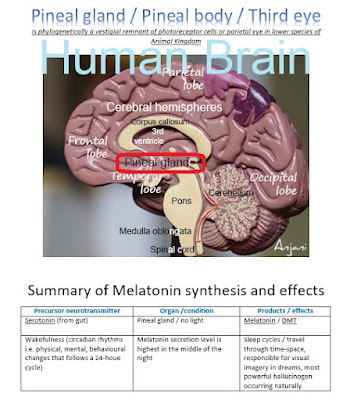
Pineal gland, the mystical third eye

Pineal gland   It is a very small unpaired midline brain structure of endocrine gland, tiny as a rice grain size, situated laterally (anatom...