Tuesday, February 18, 2014

Vedic insight: understanding life through Upanishad story

"In the whole world there is no study so beneficial and so elevating 
as that of the Upanishads. 
It has been the solace of my life - it will be the solace of my death."
Schopenhauer (1788-1860)

The Kathopanishad is an ancient Indian scripture that addresses the reality of Death and the dimensions beyond it. It is the story of Nachiketa, ... (story of Nachiketa from Kathopanishad)

The Katha Upanishad (Devanagari: कठ उपनिषद्) (Kaṭhopaniṣad, also Kāṭhaka), also titled "Death as Teacher", it contains passages that suggest contact with Buddhist ideas, so was likely composed after the fifth century BCE. and may be the most widely known amongst all the Upanishads; its early Persian translations first found their way into Europe. Max Müller translated it 1879, Edwin Arnold rendered it in verse, as "The Secret of Death" and Ralph Waldo Emerson gave the central story at the end of his essay, Immortality. Central to the text is the story of Nachiketa, son of sage Vajasravasa, and his encounter with Yama, Hindu God of death.
Some verses from Kathopnishad:
श्रेयश्च प्रेयश्च मनुष्यमेतः
तौ सम्परीत्य विविनक्ति धीरः ।
श्रेयो हि धीरोऽभि प्रेयसो वृणीते
प्रेयो मन्दो योगक्षेमाद्वृणीते ॥ ॥ कठ उपनिषद् – 1.2.2 ॥
Translation:
The righteous and the pleasurable approach man.
The intelligent one examines both and separates them.
Yea, the intelligent one prefers the righteous to the pleasurable,
(whereas) the ignorant one selects the pleasurable
for the sake of yoga (attainment of that which is not already possessed)
and kshema (the preservation of that which is already in possession). – Katha Upanishad – 1.2.2
उत्तिष्ठत जाग्रत
प्राप्य वरान्निबोधत ।
क्षुरस्य धारा निशिता दुरत्यया
दुर्गं पथस्तत्कवयो वदन्ति ॥ कठ उपनिषद् – 1.3.14 ॥
Translation:
Arise, awake, and learn by approaching the exalted ones,
for that path is sharp as a razor’s edge, impassable,
and hard to go by, say the wise. Katha Upanishad – 1.3.14
(shared thankfully from:http://en.wikipedia.org/wiki/Katha_Upanishad)


Osho explains:
Religion is the art of dying consciously. Religion is the science of entering into death in total understanding and awareness. And the person who enters death consciously, for him death disappears forever because by dying consciously he knows that he is not dying at all. Dying consciously, he knows that what is the body - it is not more than when you discard old clothes - but his inner flame of consciousness is burning bright even in death; even the storm of death is unable to blow it out.

Nachiketa went to the door of death, the whole phenomenon was just reversed - because it is always death that comes to man; man does not go to death.

When you go to death, you will find that there is no death; death does not exist. It appears to exist only because you escape from it. The more you escape, the more real it is.

Whosoever has knocked at the door of death has never found it to be there. Death is an illusion.

An illusion is that which increases by running away from it and decreases by moving closer to it.

Death does not exist, death is an absolute lie. Death is the greatest lie in the world.
(excerpts thankfully shared from Osho's discourses on Kathopnishad)

some related references from blog author:
understanding life through inanimate world
understanding life through animate world
understanding life by electrical responses

Tuesday, January 14, 2014

Understanding life by electro-physiological responses in the living and non living

A number of pioneering discoveries made by Jagdish Chandra Bose of India, 
more than 100 years ago, 
leave us to visualize about the broader concept of life;
encompassing animals, plants as well as non living material too,
proving with his own designed instruments that:
1. Elecrical nature of conduction of stimuli in animals are same as to the plants and they can "feel pain, understand affection etc."

2. Cells as well as metals both show fatigue response to the stimulation

Perhaps this was the first time in history of biophysics, 
that a comparative study of living and non living world has been performed 
and demonstrated so successfully.


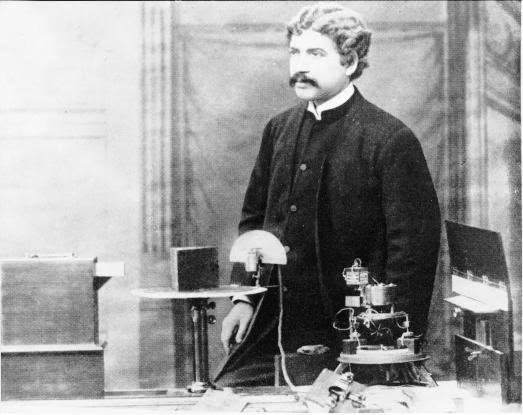
Jagadish Chandra Bose
in Royal Institution, London
 Bose's place in history has now been re-evaluated, and he is credited with the invention of the first wireless detection device and the discovery of millimetre length electromagnetic waves and considered a pioneer in the field of biophysics.


Many of his instruments are still on display and remain largely usable now, over 100 years later. They include various antennas, polarisers, and waveguides, which remain in use in modern forms today.


Electro-physiology of animals and plants: His major contribution in the field of biophysics was the demonstration of the electrical nature of the conduction of various stimuli (e.g., wounds, chemical agents) in plants, which were earlier thought to be of a chemical nature.

From the analysis of the variation of the cell membrane potential of plants under different circumstances, he hypothesised that plants can "feel pain, understand affection etc."

The central hall of the Royal Society in London was jam-packed with famous scientists on May 10, 1901. Everyone seemed to be curious to know how Bose’s experiment will demonstrate that plants have feelings like other living beings and humans. Bose chose a plant whose mots were cautiously dipped up to its stem in a vessel holding the bromide solution. The salts of hydrobromic acid are considered a poison. He plugged in the instrument with the plant and viewed the lighted spot on a screen showing the movements of the plant, as its pulse beat, and the spot began to and fro movement similar to a pendulum. Within minutes, the spot vibrated in a violent manner and finally came to an abrupt stop. The whole thing was almost like a poisoned rat fighting against death. The plant had died due to the exposure to the poisonous bromide solution.

Metal fatigue and cell response: Bose performed a comparative study of the fatigue response of various metals and organic tissue in plants. He subjected metals to a combination of mechanical, thermal, chemical, and electrical stimuli and noted the similarities between metals and cells. Bose's experiments demonstrated a cyclical fatigue response in both stimulated cells and metals, as well as a distinctive cyclical fatigue and recovery response across multiple types of stimuli in both living cells and metals.
Bose documented a characteristic electrical response curve of plant cells to electrical stimulus, as well as the decrease and eventual absence of this response in plants treated with anaesthetics or poison. The response was also absent in zinc treated with oxalic acid. He noted a similarity in reduction of elasticity between cooled metal wires and organic cells, as well as an impact on the recovery cycle period of the metal.

# share courtesy:http://en.wikipedia.org
# books:
Response in the Living and Non-living, 1902
Comparative Electro-physiology, 1907
Researches on Irritability of Plants, 1913
The Nervous Mechanisms of Plants, 1926
# more references:

Tuesday, January 7, 2014

Understanding life by the cycle of matter and energy in animate world

  •  World (animate and inanimate, both) seems to be an interactive play of 'matter and energy'
  •  Dual nature of matter could be explained well as: 'matter is a condensed energy',
  •  As per our understanding ('law of thermodynamics'), energy 'can not be created or destroyed',
  •  An actual end ('annihilation') is not there,
  •  What we call 'death', is a phase of evolutionary change of existence; better to say: a 'gene journey'.
Likewise in animate world the duality of matter is available at all level, 
i.e. from cell to organ. 
Physiology is complete only by a constant conversion of matter and energy 
i.e. electrical and chemical both:
('Electrophysiology' and 'Electrochemistry' explains the 'Responses' and 'Nervous Mechanism')
  •  As a single cell functions on fundamentals of duality of matter; exerting both chemical and electrical commands to sustain and communicate within and without,
  •  And on further complex level, even a single organ functions again on chemical and electrical, both kinds of control,
  •  So be it a cell or a complex organ of a living being, here again like the material world, we find a constant inter-conversions between matter and energy.


Electrical and chemical working of individual neuron is an example of dual behavior of matter in a single cell :
The human body is made up of trillions of cells. Cells of the nervous system, called nerve cells or neurons, are specialized to carry "messages" through an electrochemical process. The human brain has approximately 100 billion neurons.

#picture courtesy: http://www.dummies.com, http://en.wikipedia.org
#further reference for transmission of a nerve impulse
Neuron is an electrically excitable cell that processes and transmits information through electrochemical signals. These signals between neurons occur via synapses, specialized connections with other cells.
The key to neural function is the synaptic signaling process, which is partly electrical and partly chemical.
Neurons communicate by chemical and electrical synapses in a process known as neurotransmission also called synaptic transmission. The fundamental process that triggers the release of neurotransmitters is the action potential, a propagating electrical signal that is generated by exploiting the electrically excitable membrane of the neuron. This is also known as a wave of depolarization.

Certain brain parts of human work both ways; electrical and chemical:
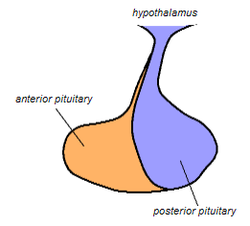
The hypothalamus, as its name implies, is situated below the thalamus — a huge collection of nuclei in the centre of the cerebral hemispheres. It forms part of the walls and floor of the central chamber of the cerebral ventricles, called the third ventricle. Hanging on a stalk underneath the hypothalamus is the pituitary gland.
Although small, this is one of the most important parts of the grey matter of the brain, for it participates in a number of vital activities. It regulates a variety of hormonal functions by action on the pituitary gland, and it exerts magisterial control over the blood vessels and glands of the body via the autonomic nervous system. It is an integral part of the limbic system, which influences important aspects of our behaviour and even our very survival, regulating such functions as emotion, sexual and nutritional appetites, rhythms, and sleep cycles. Some cells of the hypothalamus detect changes in body temperature and chemistry, and participate directly in the control of our temperature and chemical balance.

Many nerve cells in the hypothalamus have a so-called ‘neuroendocrine’ function — instead of producing transmitter substances that simply communicate directly with other neurons, they secrete chemicals that act as hormones, circulating in the blood and affecting other parts of the body. (by Laurence Garey)

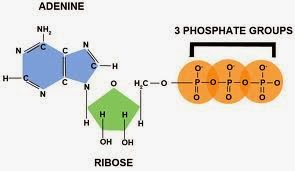
ATP
, molecular currency of intracellular energy transfer:
ATP can be produced by various cellular processes, most typically in mitochondria by oxidative phosphorylation under the catalytic influence of ATP synthase or in the case of plants in chloroplasts by photosynthesis.
Energy is released by hydrolysis of the third phosphate group. After this third phosphate group is released, the resulting ADP (adenosine diphosphate) can absorb energy and regain the group, thus regenerating an ATP molecule; this allows ATP to store energy like a rechargeable battery.


# picture thankfully shared:http://en.wikipedia.org and various other internet sources. 

Wednesday, January 1, 2014

Undersatnding life by the cycle of matter and energy in inanimate world

Abstract:
  •  World (animate and inanimate, both) seems to be an interactive play of 'matter and energy'
  •  Dual nature of matter could be well explained as: 'matter is a condensed energy',
  •  As per our understanding ('law of thermodynamics'), energy 'can not be created or destroyed',
  •  An actual end ('annihilation') is not there,
  •  What we call 'death', is a phase of evolutionary change of existence; better to say: a 'gene journey'.

Matter and energy equivalence
In physics, mass–energy equivalence is the concept that the mass of an object or system is a measure of its energy content. 
E=MC2
where E is energy, m is mass, and c is the speed of light. Thus, this mass–energy relation states that the universal proportionality factor between equivalent amounts of energy and mass is equal to the speed of light squared. This also serves to convert units of mass to units of energy, no matter what system of measurement units is used.
According to the older theories of classical physics, energy is treated solely as a continuous phenomenon, while matter is assumed to occupy a very specific region of space and to move in a continuous manner. 
According to the quantum theory, energy is held to be emitted and absorbed in tiny, discrete amounts. An individual bundle or packet of energy, called a quantum (pl. quanta), thus behaves in some situations much like particles of matter; particles are found to exhibit certain wavelike properties when in motion and are no longer viewed as localized in a given region but rather as spread out to some degree.

Matter: according to the de Broglie concept, the matter has dual nature. It means when the matter is moving it shows the wave properties (like interference, diffraction etc.) are associated with it and when it is in the state of rest then it shows particle properties. Thus the matter has dual nature. The waves associated with moving particles are matter waves or de-Broglie waves.
(In 1924 a young physicist, de Broglie, speculated that nature did not single out light as being the only matter which exhibits a wave-particle duality. He proposed that ordinary ``particles'' such as electrons, protons, or bowling balls could also exhibit wave characteristics in certain circumstances. Quantitatively, he associated a wavelength $\lambda$ to a particle of mass m moving at speed v :) 
 
Electron: sometimes acts like a particle and sometimes it acts like a wave. It really depends on the situation (i.e the experiment you are doing and how you measuring things).
In 1905, Albert Einstein provided an explanation of the photoelectric effect, a hitherto troubling experiment that the wave theory of light seemed incapable of explaining. He did so by postulating the existence of photons, quanta of light energy with particulate qualities.
In the photoelectric effect, it was observed that shining a light on certain metals would lead to an electric current in a circuit. Presumably, the light was knocking electrons out of the metal, causing current to flow.

First law of thermodynamics: energy can be changed from one form to another, but it cannot be created or destroyed. The total amount of energy and matter in the Universe remains constant, merely changing from one form to another. The First Law of Thermodynamics (Conservation) states that energy is always conserved, it cannot be created or destroyed. In essence, energy can be converted from one form into another.

Second law of thermodynamics: states that "in all energy exchanges, if no energy enters or leaves the system, the potential energy of the state will always be less than that of the initial state." This is also commonly referred to as entropy. A watchspring-driven watch will run until the potential energy in the spring is converted, and not again until energy is reapplied to the spring to rewind it. A car that has run out of gas will not run again until you walk 10 miles to a gas station and refuel the car. Once the potential energy locked in carbohydrates is converted into kinetic energy (energy in use or motion), the organism will get no more until energy is input again. In the process of energy transfer, some energy will dissipate as heat. Entropy is a measure of disorder: cells are NOT disordered and so have low entropy. The flow of energy maintains order and life. Entropy wins when organisms cease to take in energy and die.

Annihilation of matter: annihilation is defined as "total destruction" or "complete obliteration" of an object; having its root in the Latin nihil (nothing). A literal translation is "to make into nothing"
In physics, the word is used to denote the process that occurs when a subatomic particle collides with its respective antiparticle, such as an electron colliding with a positron. Since energy and momentum must be conserved, the particles are simply transformed into new particles. They do not disappear from existence. 
Encounters between particles and antiparticles lead to the annihilation of both, giving rise to varying proportions of high-energy photons (gamma rays), neutrinos, and lower-mass particle–antiparticle pairs.

#further reference for study: GUT matter
#picture courtesy: http://en.wikipedia.org

Tuesday, December 24, 2013

Cancer cell: behaving as an organism defying death

Cell is
 structural and functional unit of life
that we all know from our high school classes..

Cell specializing in to  
tissue, tissue system, organ, organ system
that is the pattern we find in 
 simple to complex evolutionary pattern in all life forms.

Amoeba always reminds us 
the hidden potentiality of a cell.. 
where many functions like growth and reproduction been discarded 
for the sake of 
ultimate cooperation of multicellularity

When a cell in our body rebels to cooperate, 
go on dividing and growing by itself, 
defying natural process of cell death called apoptosis
that becomes cancerous..

Cell is still a mystery..
As and when it behaves of it's own, 
as selfishly competing organism in itself, 
for the reasons unknown..!!


Cell as we all know about:
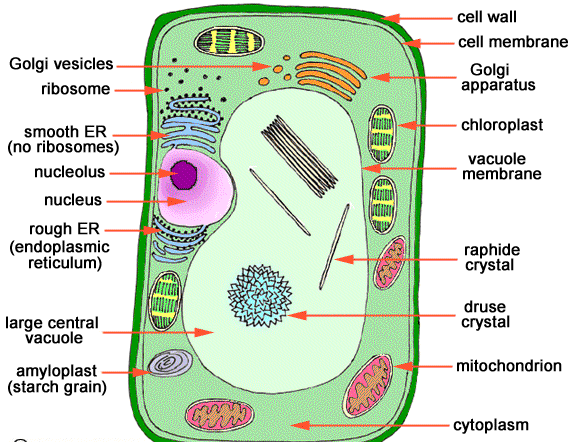
Cell is a structural and functional unit of life, that's what our study revealed.
Basic structures were the same as for the animal cell ..
Basic structures were the same as for the plant cell too..

Similar work lead similar specialization of cells 
and that lead to formation of Tissue and Tissue System
Further advancement lead to Organ and Organ System formation 
in most evolved animals and plants of today..


Today we have a world of lives,
where..
1. Amoeba, which is a single cell organism, acellular better suits a name..


2. Plants evolved at Organ System level, but cell physiology is still the same at the cellular level..

where..
2. Animals evolved at Organ System level, but cell physiology is still the same at the cellular level..


Cell as it still remains to be known:
Cancer cells have amazed us by behaving as an organism defying death:
Cancer is ultimately the result of cells that uncontrollably grow and do not die. 
Normal cells in the body follow an orderly path of growth, division, and death. 
Programmed cell death is called apoptosis, and when this process breaks down, cancer begins to form. Unlike regular cells, cancer cells do not experience programmatic death and instead continue to grow and divide. This leads to a mass of abnormal cells that grows out of control.

Reality of multicellularity (One Cell in Multicellular Organization): “Multicellularity is the ultimate in cooperation,” said Travisano, who wants to understand how cooperation emerges in selfishly competing organisms. “Multiple cells make up an individual that cooperates for the benefit of the whole. Sometimes cells give up their ability to reproduce for the benefit of close kin.

The Paramount Factor: The new study suggests that environmental conditions are paramount: Give single-celled organisms reason to go multicellular, and they will.
(evolutionary biologist Michael Travisano of the University of Minnesota, co-author of a study Jan. 17 in the Proceedings of the National Academy of Sciences.)

Study of viruses may reveal the molecular evolutionary history of cell and tendencies hidden: It has been suggested that DNA and DNA replication machineries first originated in the viral world (Forterre 1999; Villarreal and DeFilippis 2000; Forterre 2002), that virus-induced transition of cells with RNA genomes into cells with DNA genomes triggered the emergence of the three cellular domains (Forterre 2006), that the nucleus of eukaryotic cells originated from a large DNA virus (Takemura 2001; Bell 2001), or even that the selection pressure to prevent the entry of virions promoted the evolution of cell walls (Jalasvuori and Bamford 2008). All these hypotheses are not easily testable, but recent findings make them reasonable. Indeed, it has been shown that cellular proteins playing very important roles in modern organisms may have a viral origin. For instance, phylogenetic analyses have revealed that the RNA polymerase, DNA polymerase and DNA helicase that transcribe and replicate DNA in modern mitochondria were recruited from a virus that was originally integrated into the genome of the bacterium at the origin of the mitochondria (Filée and Forterre 2005). More recently, it has been shown that placentation in mammals is initiated by a protein, syncitin, encoded by a retrovirus integrated in mammalian chromosomes (De Parseval and Heidmann 2005; Prudhomme et al. 2005). There are many other examples of the role that viruses have played in recent cellular evolution (for reviews, see Ryan 2007; Brosius 2003; Villarreal 2005). Brosius wrote, for instance, that “the interaction of hosts with retroviruses, retrotransposons and retroelements is one of the eternal conflicts that drive the evolution of life” (Brosius 2003). Prangishvili and myself have recently extended his argument, concluding that the conflict between cells and viruses has been (and still is) the major engine of life evolution (Forterre and Prangishvili 2009).

Latest findings in viral studies compels to coin new definition of life and organism:
Life: Mode of existence of ribosomes encoding organisms (cells) and capsid encoding organisms (viruses) and their ancestors.
Organism: An ensemble of integrated organs (molecular and cellular) producing individuals evolving through natural selection.
(shared from:Defining life: The virus viewpoint by Patrick Forterre in NCBI article: Published online 2010 March 3)

#some related blogpost links:
cancer cases in india
cellular chemistry of cancer cell
unruly behaviour of cell
viruses are cellular organism
vedic poetry of creation
cell multicellularity in new perspective
biological classification
origin of life in metaphysical perspective
mitochondria is a prokaryotic cyanobean symbiont

Tuesday, December 17, 2013

Cancer: a non communicable disease on rise in India

New cancer case to rise 21% in 7 years.
India to have 1.32 million cancer patients by 2020.
Increase in incidence of cancers of lung, thyroid and brain tumor is rising among the young.
Gall bladder cancer in women seems to be rising  
(apart from breast and uterine cancer)
as is kidney cancer in males.
(Decreasing cervical and increasing breast cancer is the trend in developed countries.)
"People are getting addicted to luxurious lifestyles and avoid physical work. There is hardly any space for exercise or walking in their daily schedules, but they have created a lot of space for liquor and tobacco,"

"India is a rare country in the sense that it imposes 11 to 20 percent customs duty on imported cancer medical equipment, while these items actually deserve to be given incentives. But we can't hope for a sensible decision from the country that spends roughly just one percent of its GDP on public health,"
thankfully shared from:http://wonderwoman.intoday.in/story/alarming-rise-in-cancer-in-india/1/97751.html 
data thankfully shared from
http://fagoniacreticaforcancer.com/New-Cancer-cases-rise.aspx
The latest findings of National Registry Program (NRCP)
of the Indian Council of the Medical Research (ICMR) shows that
new cases growing at roughly 2.8% a year, leading to the projection of a 21% increase in the 7years. Estimated new cases stood at 1,086,783 in 2013, projected to 1,148,692 in 2015 and 1,320,928 in 2020.
Indian states most affected with following types of cancer:
National Center for Disease Informatics and Research ( a dedicated Government institute of India which collects cancer data) in their latest report from 2009 to 2011 says that Aizawal district in Mizoram shows the highest AAR (Age Adjusted Rate) in both males and females. All PBCRs (population Bases Cancer Registries) in Gujrat and Maharshtra and Bhopal PBCR have revealed mouth as leading site of cancer while cancer of Oesophagus leads in registries in Assam and Meghalaya. Stomach cancer is largest cancer in Sikkim and Mizoram while the cancer of the Nasopharynx is leading cancer in Nagaland.

The scientific advisory committee of the program has recommended making cancer a notifiable disease.
Press reports in Indian media about
increasing in incidence of cancer
Dainik Bhaskar/08.09.2013
At present only Punjab and Tripura states of India make reporting mandatory. The recommendation is under consideration.

Private medical colleges and hospitals in the country are planning to come up with a program to help the poor sections of society to face this menace of new uprising in these two non communicable diseases: Diabetes and Cancer.

On the initiatives of WHO, the health ministers of South East Asian nations are soon going to meet to discuss some common strategies to tackle these diseases.
(National News Network, New Delhi reports)

Tuesday, December 10, 2013

Cancer: deeper cellular chemistry and bioinformatics as the future line of treatment

Newer approach to understand cancer:
We now consider cancer as a systems biology disease, not just a disease of genetics. Depending on what numbers we use, 12 to 18 percent of cancers are familial or hereditary—which means the rest of them are not. They are somatic, in that the mutations that cause the cancer arise during a person's lifetime. So there's something about people’s biology that either predisposes them to cancer or keeps them healthy.

# At its root, cancer is a disease of the DNA. But to cure it, we need to move beyond genetics and work together to uncover cancer’s deeper cellular chemistry, says Ronnie Andrews, President, Genetic and Medical Sciences at Life Technologies. Scientific American spoke with Andrews* about this new approach to combat cancer in the 21st century.
*thankfully shared from a blog by Ronnie Andrews - 11/11/13 : file:///E:/cancer-reconceptualized.html


Finding a cure means: 
Let's say the blueprint for a cancer is developed in a downtown Los Angeles architectural firm. But the cell doesn’t become cancerous unless the blueprint makes it to a manufacturing facility located in Newport Beach. So the architects give their blueprint to a courier who drives to Newport Beach and can get there one of many different ways—if a road is blocked off somewhere, he can take a different route. After the Human Genome Project, pharmaceutical companies realized that they may not be able to change the blueprint for cancer—as in, the genetic instructions for it—but they could potentially block the highway system so that the courier couldn’t get to the manufacturing center and deliver these instructions. By this we mean that it might be possible to keep the cancer genome from being transcribed—to prevent the "bad" proteins that create massive cell production from ever being made. 

Treating individual patient:
Let's say you get a biopsy of a person’s tumor and identify a handful of cells of interest in that tumor. Then you do a whole genome sequence analysis of those cells and see all of the multiple potential mutational drivers of the cancer. At the same time, there are new proteomic tools coming out that will show us in real great detail and quantification not only what proteins are being produced, but where they’re being produced in the cell. 

Once we have all this information, what do we do? Let's go back to our analogy. What we want to do is make a Google map of the patient's cancer cells. Then a doctor could figure out where the courier is at any point in time and pick drugs that stop the courier today by disrupting a particular biochemical pathway. And, after identifying future off-ramps that the courier might take, doctors could also prescribe drugs that would thwart the cancer in the future. 

http://ncip.nci.nih.gov/blog/bioinformatics/

Role of bioinformatics:
To find this perfect cocktail, you can imagine that a doctor would flip open an iPad, log on to a portal and pull down his patient’s information, which is password and HIPAA protected. Then he would relate the data from his patient to outcomes from similar patients from the past, whose details have been kept, anonymously, in a centralized database. He'll be able to query the database and say, "show me 50 patients around the world that look like my patient at the genome and protein level, and now show me the top protocols that have allowed for the best survival rates for that patient." This is the power of bioinformatics that we’re now all chasing. (*thankfully shared from a blog by Ronnie Andrews - 11/11/13 : file:///E:/cancer-reconceptualized.html)

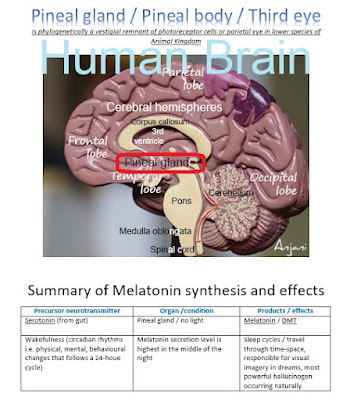
Pineal gland, the mystical third eye

Pineal gland   It is a very small unpaired midline brain structure of endocrine gland, tiny as a rice grain size, situated laterally (anatom...