Tuesday, August 27, 2013

Soft drink and health hazards

Cause of cold death for 95 thousand families 
A report says that the soft drink was the cause of death of 95 thousand people in 2010 in India. Soft drinks are proving as slow poison, destroying thousands of families.

(A research report of 2010 conducted in India on untimely deaths, analysis based on age, sex and area; co-relating the 67 different risk factors with the habit of using soft drinks. Data were co related with the 1990 and 2010, even including the reports of recently published in Britain's prestigious Medical Joun. Lacent.)
Soft drinks and health 
hazards/Dainik Bhaskar/
14th April 2013, Sun
Reports published by American institute, 'National Institute of Diabetes, Digestive and Kidney Diseases' says that 180 thousand people die annually due to soft drink consumption. Exactly the same report has come from India this year in March.
Prestigious American institute, 'Institute for health matrix and evaluation', in their 'Global burden of disease studies-2010', says that death cause of 95427 persons were the consumption of these sweet soft drinks, in 1990 the number were 36591, as compared to, this is 161% increase.
Institute's director of communication Bill Hissells explains the findings of the research report of 2010, all these mortality of soft drink addicted people, 78017 died of heart disease, 11314 of diabetes, 6096 died as cancer patients.
Causal chemical remains illusive, as these reports did not identify yet the disease causing chemical in soft drinks, responsible for deaths.

Seven side effects of soft drinks:
1. Phosphoric Acid, two cans daily, risk of stones.
2. Artificial sweeteners, causing addiction for soft drinks.
3. Caramel colors (4 MI), chemical imparting caramel color, 30 microgram in a can is carcinogenic, while it is found even up to 140 microgram  in a can of these soft drinks.
4. Food dyes, affecting human brain, focus impairment.
5. High fructose corn sirup, these are concentrated sugar. A can of soft drink contains 8 table spoons, which causes the increase in body fat and cholesterol including the Type-2 diabetes.
6. Formaldehyde, Soda contains espartem, which in digestion process break in to Methanol and then in to Formic Acid and Formaldehyde, which is carcinogenic. 
7. Potassium Benzoate, used as preservative, which turns in to Benzene in human body. Benzene is carcinogenic. Keeping soda in sun light, it turns in to Benzene.
Sugar is enemy, Dr. Parwez Ahmad, ex CEO of Max Healthcare says that all caffeine included sugar drinks-which provides instant energy, but affects our metabolism in adverse ways in longer terms and are responsible for chronic diseases. This can cause Obesity and Diabetes.
Soft drinks and health  
hazards/Dainik Bhaskar/
 14th April 2013, Sun
Soft Drinks causing 183 thousand death annually in the world, as per the researchers of 'Harvard School of Public Health.
# Out of which, 133 thousand died of diabetes, 44,000 due to cardiovascular diseases, and 6,000 died of cancer.
# 75% deaths were in lower income group of countries.
# Mexio has the highest rate of such deaths. Out of all the 1million deaths reported-318 deaths are linked to soft drink consumption.
# Japan having the lowest rate of such deaths. Out of all 1million deaths of adults, only 10 are linked to soft drink consumption.

A government report on soft drink addiction in India; Indian Council of Medical Research (ICMR) prepared a report on soft drink consumption in India, in 2011. This reports opens many facts about the addiction of carbonated drinks in India.
* 17.45% population of India drinks soft drink every week.
* Almost 18.47% children drink soft drink once in a week.
* 3.79% Indian population drinks cola everyday.
* Out of all the 18 years age children, 4.14% drinks cola every day.
* Contrary to the common beliefs, slum dwellers (23.90) drink more cola per week as compared to the  high income group (20.21).

Alarming increase in cola consumption; From 2009 to 2011, sale of Pepsi Cocacola have increased with a rate of 50% in India.

What happens to our body after drinking Coca Cola?
http://www.whydontyoutrythis.com/2013/09/what-happens-to-our-body-after-drinking-coca-cola.html


What Happens To Our Body After Drinking Coca Cola? Read More: http://www.whydontyoutrythis.com/2013/09/what-happens-to-our-body-after-drinking-coca-cola.html - Follow us on Facebook: whydontyoutrythis


#report thankfully shared from a report on soft drinks and health hazards/dainik bhaskar/bilaspur/14th April 2013, Sunday.

Tuesday, August 20, 2013

Prostate Specific Antigen: A misnomer and immune suppressor for itself

The prostate (from Greek προστάτης – prostates, literally "one who stands before", "protector", "guardian") is a compound tubuloalveolar exocrine gland of the male reproductive system in most mammals.The function of the prostate is to secrete a slightly alkaline fluid, milky or white in appearance, that usually constitutes 50–75% of the volume of the semen along with spermatozoa and seminal vesicle fluid. Semen is made alkaline overall with the secretions from the other contributing glands, including, at least, the seminal vesicle fluid. The alkalinity of semen helps neutralize the acidity of the vaginal tract, prolonging the lifespan of sperm. The alkalinization of semen is primarily accomplished through secretion from the seminal vesicles.
PSA is an acronym for “prostate specific antigen,” a protein made specifically by the prostate gland (gamma-seminoprotein or kallikrein-3 (KLK3), is a glycoprotein enzyme encoded in humans by the KLK3 gene). The biological role of the prostate is to contribute fluids and proteins to semen at ejaculation. The other glands that contribute fluids and proteins to semen are the seminal vesicles. The prostate and seminal vesicles contract at ejaculation; the seminal vesicles contribute proteins that are extremely large, making semen thick, thus concentrating the sperm in the vagina, close to the cervix, the opening to the uterus. PSA is a specific type of protein, an enzyme, that is capable of breaking up the large seminal vesicle proteins, making them shorter and less viscous, allowing the sperm to swim free of the ejaculate, through the cervix into the uterus and fallopian tubes in search of an egg.

Prostate-specific antigen is a misnomer: it is an antigen but is not specific to the prostate. Although present in large amounts in prostatic tissue and semen, it has been detected in other body fluids and tissues.
(In women, PSA is found in female ejaculate at concentrations roughly equal to that found in male semen. Other than semen and female ejaculate, the greatest concentrations of PSA in biological fluids are detected in breast milk and amniotic fluid. Low concentrations of PSA have been identified in the urethral glands, endometrium, normal breast tissue and salivary gland tissue. PSA also is found in the serum of women with breast, lung, or uterine cancer and in some patients with renal cancer.)
Contradictory role of PSA as disease indicator: PSA is present in small quantities in the serum of men with healthy prostates, but is often elevated in the presence of prostate cancer or other prostate disorders. PSA is not a unique indicator of prostate cancer, but may be detect also prostatitis or benign prostatic hyperplasia.

PSA is produced in the epithelial cells of the prostate, and can be demonstrated in biopsy samples or other histological specimens using immunohistochemistry. Disruption of this epithelium, for example in inflammation or benign prostatic hyperplasia, may lead to some diffusion of the antigen into the tissue around the epithelium, and is the cause of elevated blood levels of PSA in these conditions.
More significantly, PSA remains present in prostate cells after they become malignant. Prostate cancer cells generally have variable or weak staining for PSA, due to the disruption of their normal functioning. Thus, individual prostate cancer cells produce less PSA than healthy cells; the raised serum levels in prostate cancer patients is due to the greatly increased number of such cells, not their individual activity. 
Another self contradictory biological role prostate as immune suppressor for itself: for the proteins and fluids contributed by the prostate to ejaculated semen is to block negative responses to sperm by cells of the immune system in the vagina to protect the female reproductive organs from bacterial infection. Laboratory studies by Bedford Research scientists have shown that even very small amounts of semen added to cultures of immune cells causes them to die within 24 hours. It seems possible that this suppression of immune response to protect sperm has the unwanted side effect of making the prostate gland itself “immune suppressed” and thus less capable of protecting itself from infections and cancer. Some men suffer from low grade infections of the prostate for years, a condition known as “chronic prostatitis.” Other men may also have chronic prostatitis, but without symptoms. Some studies indicate that chronic, low-grade infections can eventually lead to cancer. 


#share courtesy:
*http://www.bedfordresearch.org
*wikipedia.org
*encyclopedia britanica, inc.

Tuesday, July 2, 2013

Recently banned drugs in India

The Indian government has banned three popular medicines the widely prescribed anti-diabetes drug pioglitazone, painkiller analgin and anti-depressant deanxit—in the wake of health risks associated with them.
While it's believed that pioglitazone can cause heart failure and increases the risk of bladder cancer, analgin has been discarded the world over on grounds of patient safety. Deanxit, on the other hand is a harmful combination, which has been long banned even in Denmark, its country of origin.The ministry of health and family welfare has suspended the manufacture and sale of all three drugs under Section 26A of the Drugs and Cosmetics Act, 1940 with immediate effect, through a notification issued on June 18, 2013.


During 2010-2011 , the Drug Controller General banned several drugs such as anti-diabetes medicine Rosiglitazone, anti-obesity drug Sibutramine, pain-killer Nimesulide for pediatric use, antibiotic Gaifloxacin, as well as Cisapride and Tegaserod, which are used for treating gastro-intestinal motility and irritable bowel syndrome , respectively. 
While the ban on Analgin in India has come after almost 36 years after the drug was banned in the US (which banned it in 1977), Pioglitazone was pulled out of France in 2011 for an increased risk of bladder cancer. 
 Analgin was withdrawn from Sweden in 1997 for the risk of causing a sharp fall in white blood cells, a potentially fatal condition. It is still being marketed in India, the house panel noted. The drug is also banned in France, Canada, Australia, New Zealand, Japan among a host of other countries. Pioglitazone, howevercontinues to be sold in most other major markets, including the US, the UK, Japan, Canada. 

General advise: Do not self medicate with NSAIDs* (e.g. Diclofenac, Lornoxicam, Etoricoxib etc.) Frequent use of these drugs is associated with the development of kidney and liver toxicity and causing gastric ulceration and bleeding. Hence, do not take these medications for longer than advised by your doctor.

*NSAIDs: Non-steroidal anti-inflammatory drug.

#A related blog post link: http://sciencedoing.blogspot.in/2013/03/pollution-threat-vanishing-vultures.html

#Following sites to be referred for more banned drugs in India:
 http://www.drugscontrol.org/ban_drugs.htm
 http://www.pharmatutor.org/pharmapedia/banned-drugs-in-india-manufacture-sale
 http://cdsco.nic.in/html/drugsbanned.html
 http://addictionsupport.aarogya.com/resources/733-drugs-banned-in-india.html

#News thankfully shared from:
 http://timesofindia.indiatimes.com
 http://economictimes.indiatimes.com


Tuesday, June 25, 2013

Urinary Bladder capacity, Acute and Chronic Urinary Retention causes, Benign Prostatic Hyperplasia factors and Alpha-1 blocker treatment

For the urine to exit the bladder, both the autonomically controlled internal sphincter and the voluntarily controlled external sphincter must be opened. Problems with these muscles can lead to incontinence.

The urinary bladder usually holds 300-350 ml of urine. As urine accumulates, the rugae flatten and the wall of the bladder thins as it stretches, allowing the bladder to store larger amounts of urine without a significant rise in internal pressure.
bladder picture
The urinary bladder is a muscular sac in the pelvis, just above and behind the pubic bone. When empty, the bladder is about the size and shape of a pear.
The internal sphincter is a continuation of the detrusor muscle and is made of smooth muscle, therefore it is under involuntary or autonomic control. This is the primary muscle for prohibiting the release of urine.
The external sphincter muscle of urethra  in males is a secondary sphincter to control the flow of urine through the urethra. Unlike the internal sphincter muscle, the external sphincter is made of skeletal muscle, therefore it is under voluntary control of the somatic nervous system.
share courtesy: wikipedia.org
Urine is made in the kidneys, and travels down two tubes called ureters to the bladder. The bladder stores urine, allowing urination to be infrequent and voluntary. The bladder is lined by layers of muscle tissue that stretch to accommodate urine. The normal capacity of the bladder is 400 to 600 mL.
During urination, the bladder muscles contract, and two sphincters (valves) open to allow urine to flow out. Urine exits the bladder into the urethra, which carries urine out of the body. Because it passes through the penis, the urethra is longer in men (8 inches) than in women (1.5 inches).
Urinary retention: Urine does not exit the bladder normally due to obstruction or suppressed bladder muscle activity. The bladder may swell to hold more than a quart of urine.
Causes of Urinary retention: There are two general types of urinary retention: obstructive and non-obstructive. If there is an obstruction (for example, kidney stones), urine cannot flow freely through the urinary track. Non-obstructive causes include a weak bladder muscle and nerve problems that interfere with signals between the brain and the bladder. If the nerves aren’t working properly, the brain may not get the message that the bladder is full.
Some of the most common causes of non-obstructive urinary retention are:
  • Stroke
  • Vaginal childbirth
  • Pelvic injury or trauma
  • Impaired muscle or nerve function due to medication or anesthesia
  • Accidents that injure the brain or spinal cord
Obstructive retention may result from:
  • Cancer
  • Kidney or bladder stones
  • Enlarged prostate (BPH) in men    
Acute and Chronic urine retention: Urine retention may be acute or chronic and occurs when something prevents the flow of urine from the bladder to the urethra and out of the body. 

In acute urine retention, but the person is unable to pass the urine, resulting in significant pain. 
Chronic urine retention is where a person is able to pass small quantities of urine with difficulty and the bladder never completely empties. It is usually painless. Symptoms of acute urine retention include lower abdominal pain, a sensation of fullness in the lower abdomen, and a painful urge and inability to pass urine. Chronic urine retention symptoms include swelling of the abdomen, a frequent need to urinate, difficulty in starting the urine flow, a weak urine flow, and dribbling at the end of urinating and between urinating. Treatment options include temporary or permanent catheterization, medication, treating the underlying cause, herbal therapies, and homoeopathy.

Acute urinary retention (AUR) is the sudden inability to pass urine. It is usually painful and requires emergency treatment with a urinary catheter. 
Causes: These are numerous and can be classified as:
  • In men - benign prostatic hypertrophy (BPH), meatal stenosis, paraphimosis, penile constricting bands, phimosis, prostate cancer.
  • In women - prolapse (cystocele, rectocele, uterine), pelvic mass (gynaecological malignancy, uterine fibroid, ovarian cyst), retroverted gravid uterus.
  • In both - bladder calculi, bladder cancer, faecal impaction, gastrointestinal or retroperitoneal malignancy, urethral strictures, foreign bodies, stones.
Infectious and inflammatory:
  • In men - balanitis, prostatitis and prostatic abscess.
  • In women - acute vulvovaginitis, vaginal lichen planus and lichen sclerosis, vaginal pemphigus.
  • In both - bilharzia, cystitis, herpes simplex virus (particularly primary infection), peri-urethral abscess, varicella-zoster virus.
A healthy human prostate is classically said to be slightly larger than a walnut. The mean weight of the "normal" prostate in adult males is about 11 grams, usually ranging between 7 and 16 grams. It surrounds the urethra just below the urinary bladder and can be felt during a rectal exam. It is the only exocrine organ located in the midline in humans and similar animals. share courtesy: wikipedia.org


#BPH is by far the most common cause of urinary retention. Alpha-1 blockers given before catheter removal increase the chances of a successful TWOC.
Diagram illustrating normal prostate (left)
and benign prostatic hyperplasia (right).
 share courtesy: http://en.wikipedia.org
Benign Prostatic Hyperplasia: BPH involves hyperplasia of prostatic stromal and epithelial cells, resulting in the formation of large, fairly discrete nodules in the periurethral region of the prostate. When sufficiently large, the nodules compress the urethral canal to cause partial, or sometimes virtually complete, obstruction of the urethra, which interferes with the normal flow of urine. It leads to symptoms of urinary hesitancy, frequent urination, dysuria (painful urination), increased risk of urinary tract infections, and urinary retention. Although prostate specific antigen levels may be elevated in these patients because of increased organ volume and inflammation due to urinary tract infections, BPH does not lead to cancer or increase the risk of cancer.
BPH involves hyperplasia (an increase in the number of cells) rather than hypertrophy (a growth in the size of individual cells), but the two terms are often used interchangeably, even amongst urologists. 
Its prevalence is age dependent. Histological evidence of BPH is rarely observed in men under 50 years of age, but by age 80 virtually all men will have some histological evidence of the process. It is unclear what specific factors regulate the degree of hyperplasia, which ultimately dictates the size of the prostate gland, nor is there any consensus regarding the prostate size that qualifies for the diagnosis of benign prostatic enlargement (BPE).


Alpha blockers for the treatment of Benign Prostatic Hyperplasia:
The relative degree of stromal and epithelial hyperplasia is highly variable. Overall, approximately 80% and 20% of the hyperplastic volume is composed of stromal and epithelial elements, respectively. Half of the stromal hyperplasia is composed of smooth-muscle elements. For decades, it was assumed that the enlarged hyperplastic prostate caused BOO via both dynamic and static mechanisms. The dynamic obstruction was thought to be the result of smooth-muscle hyperplasia causing a functional obstruction and static obstruction arising from the bulk enlargement of the hyperplastic process encroaching upon the prostatic urethra.

Marco Caine demonstrated in 1975 that strips of human prostate contracted in response to norepinephrine.The norepinephrine-induced contractions were inhibited by pretreatment with phenoxybenzamine, a non-selective inhibitor of alpha adrenoceptor. These studies implicated the alpha adrenoceptor as the mediator of prostate smooth-muscle contraction. Lepor and Shapiro were the first investigators to characterize both alpha 1 and 2 adrenoceptors in the human prostate using radioligand binding studies.  

Tamsulosin was the third alpha 1 blocker to be approved for the treatment of BPH. Tamsulosin was brought to market as the first subtype selective alpha 1 antagonist for the treatment of BPH. Tamsulosin alpha 1 subtype selective was supported by binding studies, which showed that tamsulosin was approximately tenfold more selective for the alpha 1a versus alpha 1b subtype. There was no demonstrable subtype selectivity of tamsulosin for the alpha 1a versus alpha 1d subtypes. The modest receptor selectivity of tamsulosin is not sufficient to result in a clinically meaningful advantage. Typically, clinical advantages attributed to pharmacological selectivity require a receptor selectivity well beyond the tenfold difference observed with tamsulosin.
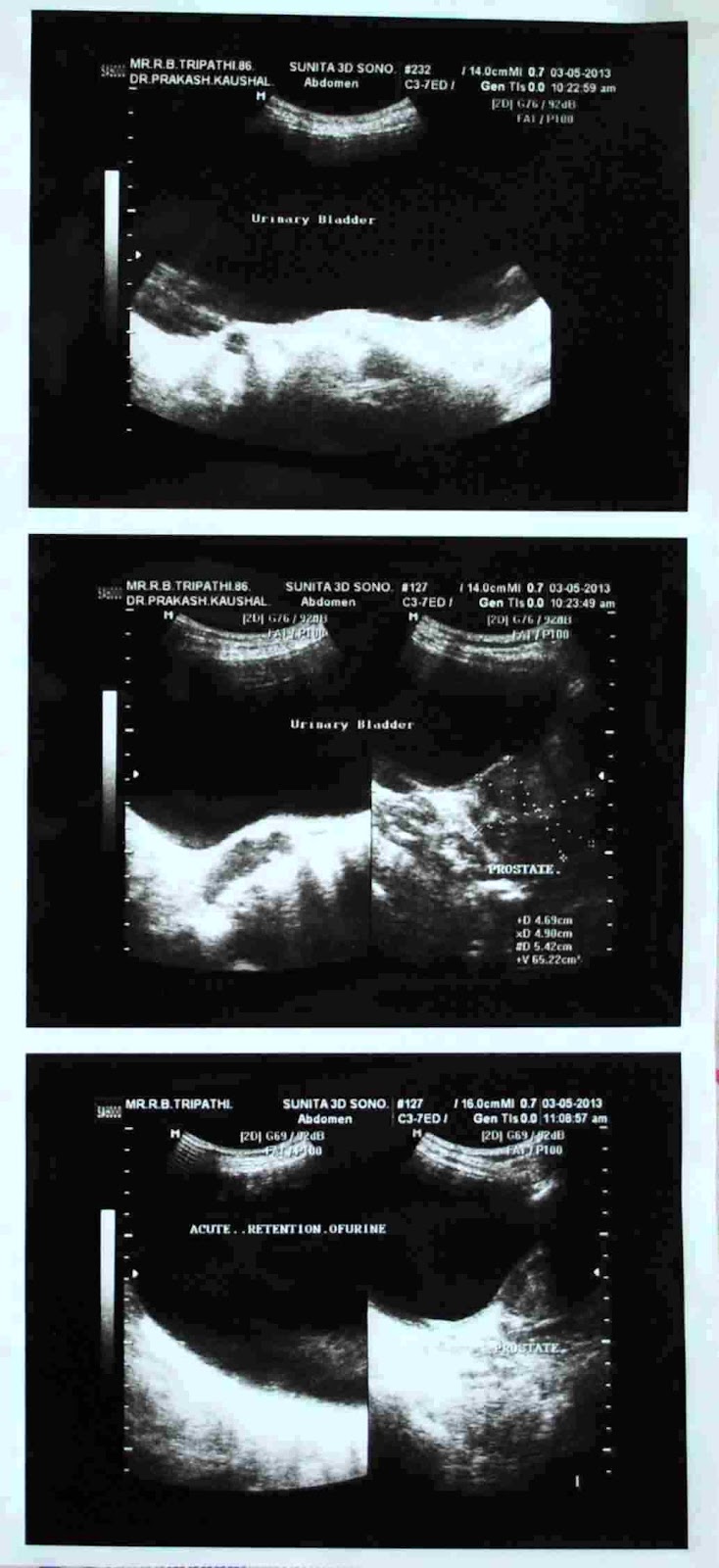
A case report:
Age: 86 years male,
Acute urinary retention 1400 ml,
Prostate enlarge, 65 gm in weight,
Chronic retention of urine
cause may be BPH with
Bladder Neck Obstruction.
#As seen in above sonograph 
picture
Two pivotal trials of tamsulosin supported the NDA for the treatment of symptomatic BPH. Both 0.4 and 0.8 mg of tamsulosin achieved clinically significant improvements in symptom scores and peak flow rate. The ability of the 0.4 mg tamsulosin dose to achieve a clinically significant effect without the requirement for dose titration represented a unique advantage over the other approved alpha blockers. Although a 0.8 mg daily dose was more effective than 0.4 mg, it did not gain popularity because it required both dose titration and taking 2 tablets of 0.4 mg. (A 0.8 mg tablet was not commercially available.) The primary reason tamsulosin was prescribed over terazosin and doxazosin was not due to greater efficacy or better tolerability, but simply the lack of dose titration. The prescribing community placed a greater value on eliminating the dose response at the expense of increasing the incidence of ejaculatory dysfunction, which was thought to be retrograde ejaculation as a result of relaxation of the bladder neck. Recent studies have demonstrated that tamsulosin causes anejaculation rather than retrograde ejaculation. The mechanism for the increased incidence of ejaculatory dysfunction associated with tamsulosin has been attributed to its affinity for dopaminergic and other central nervous system receptors. 
An episode of acute urinary retention is no longer an absolute indication for surgical intervention. Alpha blockers are a very reasonable initial option for managing acute urinary retention.

Following sites referred thankfully and reference for further detail:
http://en.wikipedia.org
http://www.webmd.com
http://www.medtronic.com
http://www.naturaltherapypages.com.au/glossary/Urine_Retention#ixzz2T2pDuWCp 
http://www.patient.co.uk/doctor/acute-urinary-retention
NCBI journal Rev Urol. 2007 Fall; 9(4): 181–190
file:///E:/Alpha%20Blockers%20for%20the%20Treatment%20of%20Benign%20Prostatic%20Hyperplasia.htm


Some abbreviations used:
Food and Drug Administration (FDA)
lower urinary tract symptoms (LUTS)
bladder outlet obstruction (BOO)
benign prostatic enlargement (BPE)
benign prostatic hyperplasia (BPH)
Medical Therapy of Prostatatic Symptoms (MTOPS)
The American Urological Association Symptoms Index (AUASI)
International Prostate Symptom Index Score (IPSS)
new drug application (NDA)
Three subtypes of the alpha 1 adrenoceptor (alpha 1a, alpha 1b, alpha 1d) have been cloned and  pharmacologically characterized.
The Antihypertensive and Lipid-Lowering Treatment to Prevent Heart Attack Trial (ALLHAT)

Tuesday, June 18, 2013

Drinking too much water can lead to hyponatremia, water intoxication, water poisoning and death

Liquid H2O is the sine qua non of life.  
Making up about 66 percent of the human body, water runs through the blood, inhabits the cells, and lurks in the spaces between. At every moment water escapes the body through sweat, urination, defecation or exhaled breath, among other routes. Replacing these lost stores is essential but rehydration can be overdone. There is such a thing as a fatal water overdose.  

The poison is the dose
Water can cause the brain to swell 
share courtesy: http://news.bbc.co.uk

Drinking several litres over a relatively short period of time could be enough to cause water intoxication. Those most at risk include people taking ecstasy, as the drug increases thirst and facilitates the release of anti-diuretic hormones so more water is taken in but cannot be excreted. Also, elderly people because their kidney function may be impaired. 

Strange but true; drinking too much water can kill.
In a hydration-obsessed culture, people can and do drink themselves to death. 


As long as you are healthy and equipped with a thirst barometer unimpaired by old age or mind-altering drugs, follow Verbalis's advice, "drink to your thirst. It's the best indicator." 

Beware of mindlessly drinking several glasses of water per day without considering your diet, exercise habits, climate, and sense of thirst. And when you do find yourself in need of water, remember that you can get it from liquids and/or whole foods that are rich in water.

Forcing your body to accept a large amount of water within a short period of time - say, an hour or two - can be fatally dangerous to your health. Here's why:
If you force large amounts of water into your system over a short period of time, your kidneys will struggle to eliminate enough water from your system to keep the overall amount at a safe level.
As your circulatory system becomes diluted with excess water, the concentration of electrolytes in your blood will drop relative to the concentration of electrolytes in your cells. In an effort to maintain an equal balance of electrolytes between your blood and your cells, water will seep into your cells from your blood, causing your cells to swell.
If this swelling occurs in your brain, you'll experience increased intracranial pressure i.e. your brain will get squeezed because the flat bones that make up your skull don't provide much give. Depending on how much water your drink in a short period of time, you could experience a wide variety of symptoms, ranging from a mild headache to impaired breathing. As occurred in the tragic water-drinking contest, it's quite possible to die if you drink enough water in a short period of time. 
Water intoxication, also known as water poisoning or dilutional hyponatremia, is a potentially fatal disturbance in brain functions that results when the normal balance of electrolytes in the body is pushed outside safe limits by over-hydration.

Water, just like any other substance, can be considered a poison when over-consumed in a specific period of time. Water intoxication mostly occurs when water is being consumed in a high quantity without giving the body the proper nutrients it needs to be healthy.

One of the many Risk factors, is  Psychogenic polydipsia is the psychiatric condition in which patients feel compelled to drink large quantities of water, thus putting them at risk of water intoxication. This condition can be especially dangerous if the patient also exhibits other psychiatric indications (as is often the case), as the care-takers might misinterpret the hyponatremic symptoms.

Following sites referred thankfully and reference for further detail:
wikipedia.org
http://www.scientificamerican.com
http://news.bbc.co.uk
http://drbenkim.com/drink-too-much-water-dangerous.html

Tuesday, June 11, 2013

Human brain: Hypothalamus as control center for ageing identified but risk lies in follow up

Hypothalamus region of the brain is the control centre of ageing. Dongsheng Cai from the Albert Einstein College of Medicine in New York has discovered yet another vital duty on the hypothalamus’ already impressive CV—it’s a command centre that coordinates the ageing process across the entire body. By manipulating proteins within it, Cai managed to speed up or slow down the pace of ageing in mice. 
The brain's mechanism for controlling ageing
has been discovered – and manipulated to
shorten and extend the lives of mice.
Drugs to slow ageing could follow
share courtesy:
http://www.newscientist.com/section/science-news
Cai’s team found that the ageing hypothalamus builds up more microglia—a dedicated brand of inflammatory immune cells in the brain, which destroy infectious microbes and vacuum up debris. They also produce NF-kB, which tells neighbouring neurons to do the same. This flood of NF-kB switches off the gene for a hormone called GnRH.
That’s a surprise—GnRH is best known as a reproductive hormone. It controls the development of our sexual organs and the making of eggs and sperm. 

Human hypothalamus 
(animation, shown in red)
share courtesy: wikipedia.org
Howard Chang from Stanford University says, “If reproduced by others, this work provides further evidence that aging is a regulated rather than a [random] process.” 

But let’s recap what we already know, just to appreciate how bizarre this chain of results is. You have a life-support centre in the brain, a protein that coordinates the immune system, and a hormone that controls our sex organs, all working together to influence… the pace of ageing?

This research follow up may bring some serious consequences as: 
Given the pathway, we would not be surprised if a large experiment showed a significant increase of cancer risk. NF-kB is a well known cancer pathway, lower levels of NF-kB1 allow cancer cells to avoid cell death (apoptosis). I imagine this works along the same lines.  

Following sites referred thankfully and reference for further detail:
http://phenomena.nationalgeographic.com/2013/05/01/almond-sized-brain-region-is-control-centre-for-ageing/
mb, may1, 2013 on http://phenomena.nationalgeographic.com/2013/05/01/almond-sized-brain-region-is-control-centre-for-ageing/
http://www.newscientist.com/section/science-news
wikipedia.org

Tuesday, June 4, 2013

Images of a molecule

"Nobody has ever taken direct, single-bond-resolved images of individual molecules, right before and immediately after a complex organic reaction," says Felix Fischer of the U.S. Department of Energy's Lawrence Berkeley National Laboratory. 
(The researchers report their results in the June 7, 2013 edition of the journal Science, available in advance on Science Express.)

Almost as clearly as textbook diagram, this image made by a noncontact atomic force microscope reveals the positions of individual atoms and bonds, in a molecule having 26 carbon atoms and 14 ydrogen atoms structured as three connected benzene rings. Credit: Lawrence Berkeley national Laboratory and University of California at Berkeley

The original reactant molecule, resting on a flat silver surface, is imaged both before and after the reaction, which occurs when the temperature exceeds 90 degrees Celcius. The two most common final products of the reaction are shown. The three-angstrom scale bars (an angstrom is a ten-billionth of a meter) indicate that the reactant and product molecules are about a billionth of a meter across. Credit: Lawrence Berkeley national Laboratory and University of California at Berkeley

The single-atom tip of the noncontact atomic force microscope "feels" changes in the strength of electronic forces as it moves across the surface at a constant height. Resulting movements of the stylus are detected by a laser beam to compute images. Credit: Lawrence Berkeley national Laboratory and University of California at Berkeley
#thankfully shared from: http://phys.org
May 30, 2013


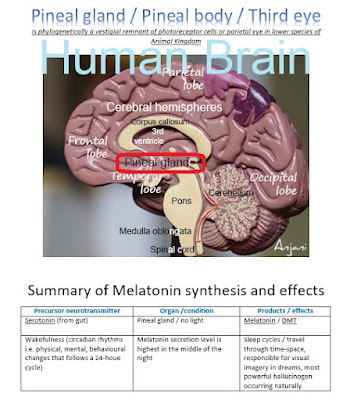
Pineal gland, the mystical third eye

Pineal gland   It is a very small unpaired midline brain structure of endocrine gland, tiny as a rice grain size, situated laterally (anatom...